Artisanal Cheese: A Journey From Pasture to Platter

0

In an age of industrial food, artisanal cheese stands apart as a celebration of craftsmanship. Each hand-crafted wheel expresses the land that nurtured the herd, the microorganisms that ripened the curd, and the cheesemaker’s intuitive touch. From Alpine cellar-aged rounds to delicate bloomy-rind disks, these cheeses preserve centuries of tradition while embracing modern curiosity and sustainability. This expanded guide explores every facet of artisanal cheese — from craft and microbes to diversity, pairings, nutrition, terroir, and future trends — illustrating why these edible time capsules continue to captivate gourmet palates around the world.


The Art and Craft of Cheese Making: Tradition Meets Innovation

rounds of Artisanal Cheese with grapes and roses

Cheesemaking begins with milk, but it ends with culture — in both the microbial and human sense. Farmers still rise before dawn to test butterfat levels and tend their herds, yet today you might find stainless-steel vats and laser-calibrated pH meters standing beside wooden hoops and clothbound molds. The modern artisanal cheesemaker blends historic know-how with contemporary innovation, much like the broader evolution of gourmet cuisine from classic roots to modern creativity (The Evolution of Gourmet Cuisine: Classic to Modern). Key steps in the cheese-making craft include:

  • Curdling: Adding rennet (or allowing natural acidity) separates the firm curds from liquid whey.
  • Cutting & Cooking: Cutting the curds and gently heating them releases moisture. The curd size and cooking temperature help determine the final texture — from the oozy creaminess of a Brie to the crumbly firmness of a Cheddar.
  • Pressing: Placing curds into molds under variable weights shapes the cheese. Lighter pressing preserves small air pockets (“eyes”) in a Gouda or Alpine cheese, while heavy pressing compacts hard cheeses like Parmigiano Reggiano.
  • Aging (Affinage): Wheels are aged in carefully controlled environments. Temperature, humidity, and time work together to coax proteins and fats into distinctive flavors — nutty, grassy, floral, or caramel-sweet, depending on the cheese.

Throughout these steps, tradition meets innovation. Many artisans still use hand tools and sensory skills passed down through generations, but you’ll also find creative twists: some makers experiment by adding cacao nibs to sheep’s milk curds for a subtle chocolate note, while others wash rinds with local craft beers or ciders to develop new flavor nuances. Even aging caves can be modernized — from repurposed stone tunnels naturally regulating climate, to eco-friendly maturing rooms powered by solar energy. The result is an industry where innovation thrives without abandoning core technique, ensuring each cheese remains authentic to its heritage while continuing to evolve.


The Role of Microbial Cultures in Artisanal Cheese Making

a charcuterie plate with Artisanal Cheese

Microscopic cultures are the invisible artisans of cheese. Lactic acid bacteria kick off the process by feasting on lactose sugars in milk, producing tangy lactic acid that helps curdle the milk and begin flavor development. As the young cheese settles, specialty molds and bacteria join the party to transform texture and taste. For example, Penicillium camemberti forms the velvety white rind on Brie and Camembert, while Penicillium roqueforti (the blue mold used in Roquefort and Stilton) creates sharp, earthy veins in blue cheeses (Penicillium roqueforti – Wikipedia). Other microbes play supporting roles: wild yeasts might deacidify a rind to prepare it for beneficial bacteria, and Brevibacterium linens (encouraged by washing rinds with brine or beer) produces the pungent orange rind and meaty aroma of cheeses like Époisses.

Over months of aging, these microorganisms act on the cheese in complex ways. Enzymes released by the microbes break down milk proteins into savory amino acids and fats into aromatic compounds, deepening the flavor. A young cheddar, for instance, may taste mild and milky, but as bacteria and enzymes work over time, the cheese develops sharpness and even crunchy tyrosine crystals. Cheesemakers manage this microscopic ecosystem much like vintners tend vineyards, adjusting conditions to guide the desired flora while suppressing unwanted molds. They might rotate wheels, brush or wash rinds, tweak salt levels, and control airflow in the maturing cave to favor the “friendly” cultures. The result is a living product that continues to evolve on the shelf, rewarding patience with ever more complexity.


Exploring the Diversity of Artisanal Cheeses
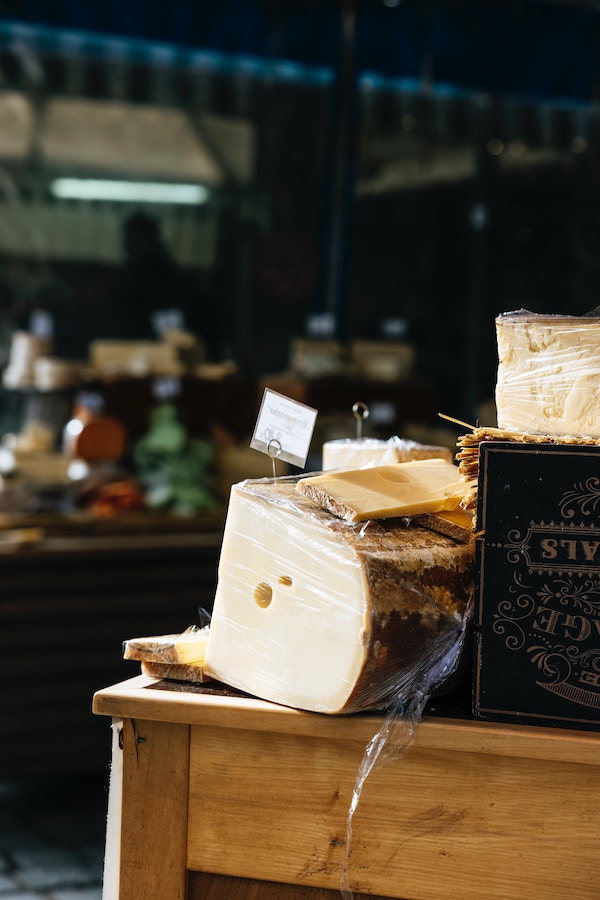
quarter of an artisanal cheese round

One of the joys of artisanal cheese is the astounding diversity of styles and flavors. Every region and cheesemaker can produce something unique, but most traditional cheeses fall into several broad categories:

  • Fresh Cheeses: These youthful cheeses (often unaged) are moist and tangy. Examples include creamy goat chèvre, fluffy ricotta, and pillowy burrata. They are best enjoyed within days or weeks of production for their delicate milky freshness.
  • Soft-Ripened: Characterized by velvety white rinds, soft-ripened cheeses like Brie de Meaux or Camembert develop a luscious gooey interior. The Penicillium rind contributes mushroomy, champignon aromas that complement the buttery paste.
  • Washed Rind: These bold cheeses (Taleggio, Époisses, Limburger) have their rinds periodically bathed in brine, beer, or spirits during aging. The washing encourages orange Brevibacterium bacteria that impart pungent, meaty and sometimes tangy flavors. Don’t be fooled by the aroma — the paste inside is often silky and full-bodied.
  • Semi-Firm: This broad category includes Alpine styles like Gruyère or Appenzeller and others such as Dutch Gouda or Spanish Mahón. The curds are usually cooked and pressed to a semi-hard texture that is sliceable. Flavors range from nutty and sweet in young versions to intensely fruity or beefy in well-aged ones.
  • Hard / Grating Cheeses: Aged the longest, hard cheeses like Parmigiano Reggiano, Pecorino Romano, or aged Manchego are very firm and often granular. They develop concentrated savory flavors and crunchy amino-acid crystals that make them perfect for grating (or nibbling in small chunks).
  • Blue-Veined: Blue cheeses such as Stilton, Roquefort, and Gorgonzola are pierced with needles during production to allow air into the interior, feeding the growth of blue mold cultures. The veins of Penicillium mold create bold flavors that can be spicy, nutty, or sweet-sharp, balanced by a creamy, sometimes crumbly texture.

Each style showcases the character of its local milk and environment. The rich butterscotch notes of an English farmhouse cheddar come from the high butterfat of Jersey cow milk, whereas a Greek goat cheese carries wild herbal hints from free-ranging goats browsing on island shrubs. The terroir – that unique combination of local pasture plants, climate, and cheesemaking tradition – shines through in artisanal cheese varieties around the world.


Pairing and Serving Artisanal Cheese
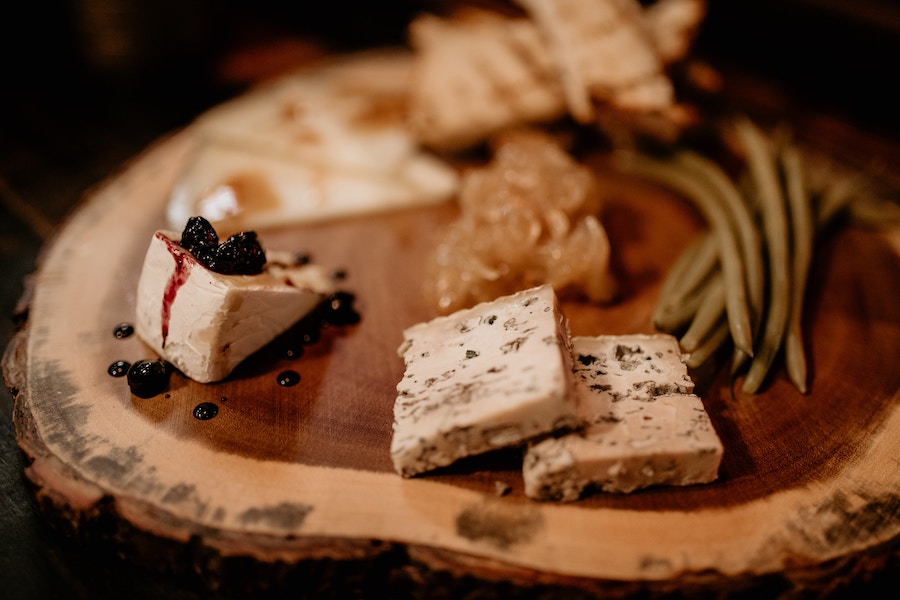
a charcuterie plate with Artisanal Cheese

Enjoying fine cheese isn’t just about the cheese itself – it’s also about how you serve it and what you pair with it. Thoughtful presentation and pairing can elevate the tasting experience, whether you’re assembling a casual cheese board for friends or a formal tasting flight.

Building an Inviting Cheese Board

A great cheese board balances flavors and textures while offering delightful accompaniments. Consider these tips when assembling yours:

  • Variety: Include a range of cheese styles (a fresh chèvre, a bloomy-rind soft cheese, a firm or semi-firm cheese, and a blue). This ensures a spectrum of flavors from mild to bold, and textures from creamy to crumbly.
  • Accents: Enhance the cheeses with artisan accompaniments. Fresh fruits or raw honeycomb accentuate creamy and tangy notes; pickled or dried fruits (like figs or cherries) provide sweet-tart contrast; roasted nuts (almonds, walnuts) add crunch; and sliced baguette or plain crackers serve as a neutral base.
  • Flow: Arrange the cheeses in order from mild to strongest (often clockwise on the board). This visual cue encourages tasters to start with the delicate flavors and progress to the most intense, so that no cheese is overwhelmed by the previous one.

Allow the cheeses to come to cool room temperature (around 18 °C/65 °F) before serving — take them out of the fridge about 30–40 minutes ahead. Serving cheese slightly cool (not cold) allows the aromas and flavors to bloom fully, making for a much more rewarding tasting.


Cheese and Wine Pairing: An Artful Combination
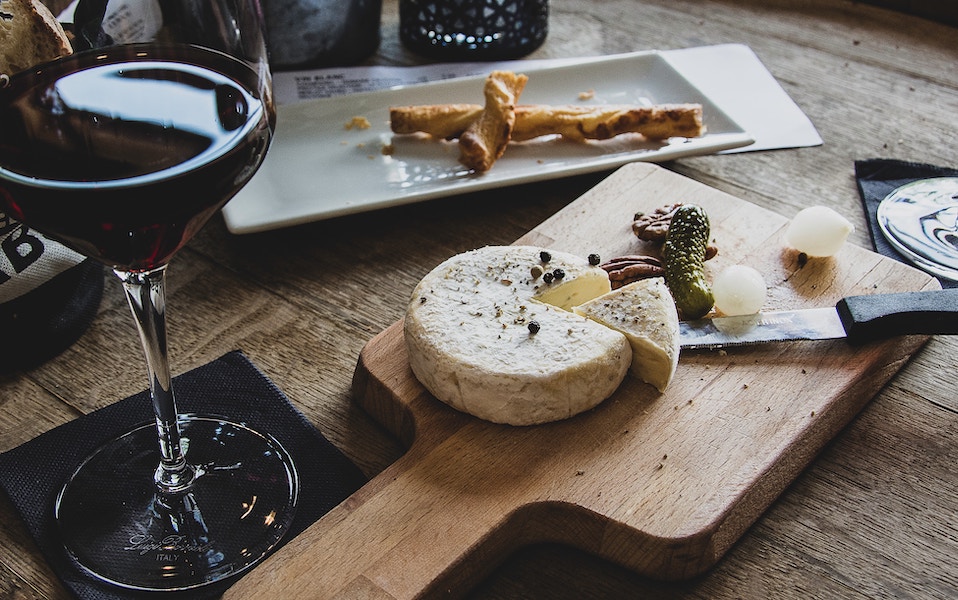
a charcuterie plate with Artisanal Cheese cut

PPairing cheese with wine is a classic culinary pleasure — when done well, each enhances the other. The art of cheese and wine pairing comes down to a few guiding principles: match the intensity of the cheese with that of the wine, balance complementary and contrasting flavors, and consider the wine’s acidity, sweetness, and tannins. In practice, this means bold, aged cheeses often pair best with robust wines, while delicate fresh cheeses shine with lighter wines (pair lighter cheeses with lighter-bodied wines, and bold cheeses with wines of similar intensity – Decanter). A high-acid white wine can “cut through” a rich, creamy cheese, cleansing the palate, whereas a sweet wine can create an exciting contrast with a salty, pungent cheese. The concept of terroir can also play a role: wines and cheeses from the same region often share a natural affinity, reflecting the characteristics of their shared origin.

Mastering this unique art of pairing transforms dining into a gourmet experience, whether for an elegant dinner party or a relaxed gathering. Here are a few inspiring pairing ideas to illustrate the range:

  • Sparkling Wine + Triple-Cream Brie: The bubbles and bright acidity of Champagne or Prosecco cut through the rich butterfat of a triple-cream cheese (like Brillat-Savarin), refreshing your palate for the next bite. Meanwhile, the wine’s biscuity notes complement the cheese’s creamy sweetness.
  • Dry Riesling + Washed-Rind Cheese: A crisp, dry Riesling has bright acidity and fruit notes that tame the pungent funk of an orange-rind washed cheese (Tallegio or Époisses), while the wine’s floral and stone-fruit nuances echo the cheese’s nuttiness. This complementary pairing lets both the wine and cheese shine.
  • Barrel-Aged Stout + Blue Cheese: Craft beer can pair wonderfully with cheese. A dark stout aged in bourbon barrels offers roasted malt, chocolate, and vanilla flavors with a touch of sweetness, which mirror and mellow the salty, spicy bite of a blue cheese. The beer’s richness stands up to the boldness of the blue, and its sweetness provides contrast.
  • Kombucha (or Cider) + Fresh Goat Cheese: For a non-alcoholic option, try a dry kombucha or sparkling cider with a tangy fresh chèvre. The effervescence and gentle acidity of kombucha cleanse the palate between bites, and its fruity or tea notes can complement the lemony tang of the goat cheese. This creates an inclusive pairing that everyone can enjoy.

Tip: When offering multiple cheeses and wines, consider providing a separate knife for each cheese to avoid mixing flavors. Encourage guests to start with milder pairings and work toward the strongest. Ultimately, personal preference rules — part of the fun is experimenting to find your own favorite combinations.


The Sensory Experience of Artisanal Cheese Tasting
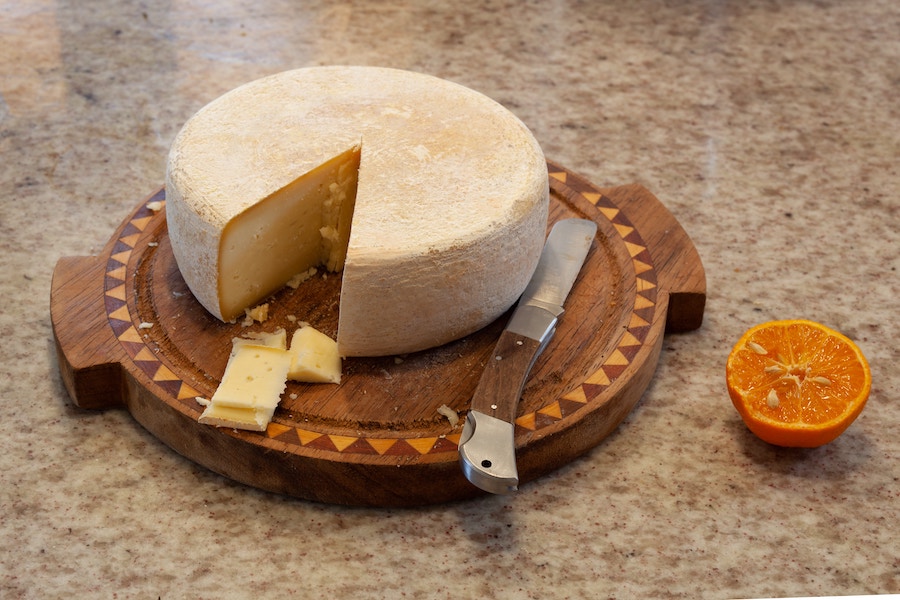
a cheese plate with Artisanal Cheese round

Tasting artisanal cheese is a multi-sensory journey. Connoisseurs know that truly appreciating a cheese means slowing down and engaging all your senses – much like a wine sommelier evaluating a fine wine. Here are the fundamental techniques for assessing a cheese’s appearance, aroma, texture, and flavor:

  • Look: First, examine the cheese. Note the color of the rind and the interior paste. Is the rind ashy gray, orange and sticky, or snowy white? Is the paste butter-yellow or bone white, uniform or dotted with holes or blue veins? Even the presence of crystalline flecks can tell you the cheese was aged and has developed amino acid crystals. Observing these visual cues can hint at the cheese’s style, milk type, and flavor (for example, an orange washed rind often means a bold flavor ahead).
  • Smell: Bring the cheese to your nose and inhale its aroma (but don’t stick your nose right on it, especially with strong cheeses; you can gently waft the air above it toward you). Identify scent notes: perhaps grassy or herbal, a mushroomy “cellar” dampness, roasted nuts, sweet cream, or even a barnyardy pungency. Our sense of smell is key to taste, so this step is crucial. Often, terms like earthy, floral, yeasty, fruity, nutty, or sharp ammonia are used to describe cheese aromas.
  • Touch: Feel the cheese’s texture between your fingers (and if it’s a softer cheese, you may simply note its consistency as you cut it). Is the paste dense and flaky, springy and elastic, or soft and oozy? Rind-washed cheeses might feel tacky or moist on the exterior, whereas a well-aged Parmesan will be hard and grainy. Texture provides clues to how the cheese was made and aged (a glossy, butter-like feel suggests high fat content, for instance, while a grainy texture indicates long aging).
  • Taste: Finally, take a small bite and let it sit on your tongue. As it warms and softens, more flavors will emerge. Notice the basic taste components first: is it primarily salty, sweet, tangy (acidic), bitter, or savory (umami)? Then focus on specific flavor notes — you might detect grassiness, hints of caramel, fruitiness, spice, wood smoke, or an earthy mustiness. Pay attention to the cheese’s finish: some cheeses start sweet and end piquant, or vice versa, with an aftertaste that lingers. Chew slowly and even exhale through your nose as you taste (this retro-olfaction can enhance flavor perception).

Don’t be afraid to develop a descriptive vocabulary as you taste. Instead of simply calling a cheese “strong” or “stinky,” you might say it has “earthy, damp forest floor notes” or “a pungent aroma reminiscent of cured meat.” Comparing impressions with fellow tasters can make the experience more fun and deepen everyone’s perception. Like any skill, cheese tasting improves with practice — the more varieties you mindfully taste, the more nuances you’ll be able to distinguish.

Organizing a cheese tasting event can be a great way to explore these sensory techniques. Provide note cards for guests to jot down their observations, and discuss each cheese together. You’ll find that engaging sight, smell, touch, and taste not only enhances appreciation for artisanal cheeses, but also creates an engaging, educational (and delicious) experience for all.


The Health Benefits and Nutritional Aspects of Artisanal Cheese
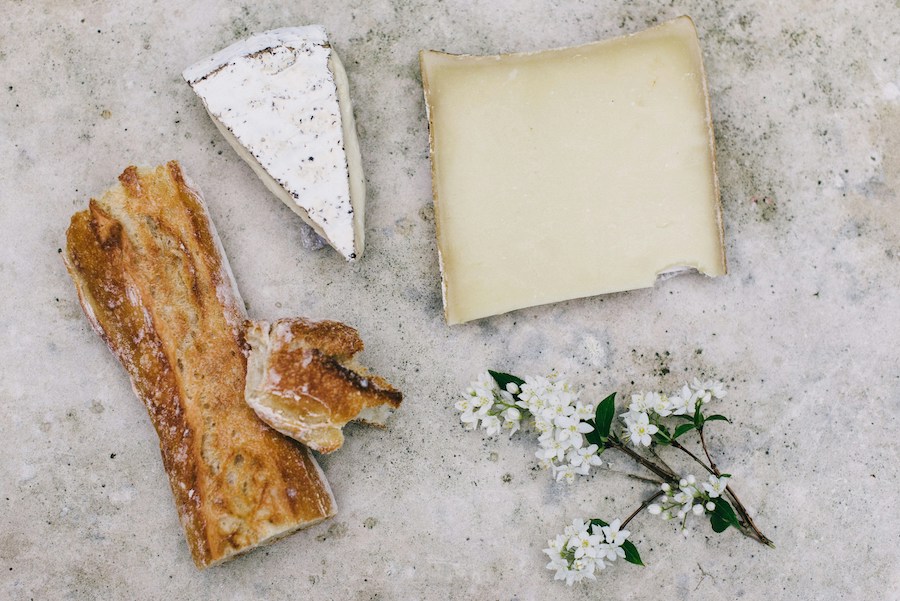
Artisanal Cheese cut, next to a piece of bread

Beyond indulgence, artisanal cheeses can offer some worthwhile nutritional benefits. Cheese is an excellent source of protein and calcium, and it provides a range of vitamins and minerals. In fact, many aged cheeses are particularly high in vitamin B12 (essential for red blood cells and nervous system health) and also contain beneficial fatty acids like conjugated linoleic acid (CLA), which has been noted for potential heart-protective and anti-inflammatory effects (artisan cheese provides calcium, protein, B12, and is a source of CLA). Cheese is a complete protein, meaning it contains all the essential amino acids our bodies need, in proportions that make them fully digestible and usable (cheese is a complete protein with all essential amino acids).

Artisanal and raw-milk cheeses also come with the advantage of natural probiotics. Because they are often produced with minimal processing and aged using traditional fermentation, they harbor a diversity of beneficial bacteria. These live cultures can contribute to a healthy gut microbiome when consumed, much like the probiotics in yogurt or kefir. Studies have shown that cheeses made with live cultures can aid digestion and even boost immune response in certain cases. For example, a raw milk farmhouse cheese contains a wider variety of bacteria, yeasts, and molds that work as “friendly” microbes in our digestion. Moreover, during a long aging period, most of the lactose (milk sugar) in cheese is consumed by bacteria or converted to lactic acid, which is why aged cheeses are typically low in lactose. This means even individuals who are lactose intolerant often tolerate aged hard cheeses like Parmesan or aged Gouda quite well. Of course, cheese is calorie-dense and often high in saturated fat and sodium, so moderation is key. But enjoyed in sensible portions, artisanal cheese can absolutely fit into a balanced diet, bringing not only joy to your taste buds but also quality protein, calcium, and other nutrients to your table.


The Influence of Terroir on Artisanal Cheese Flavors
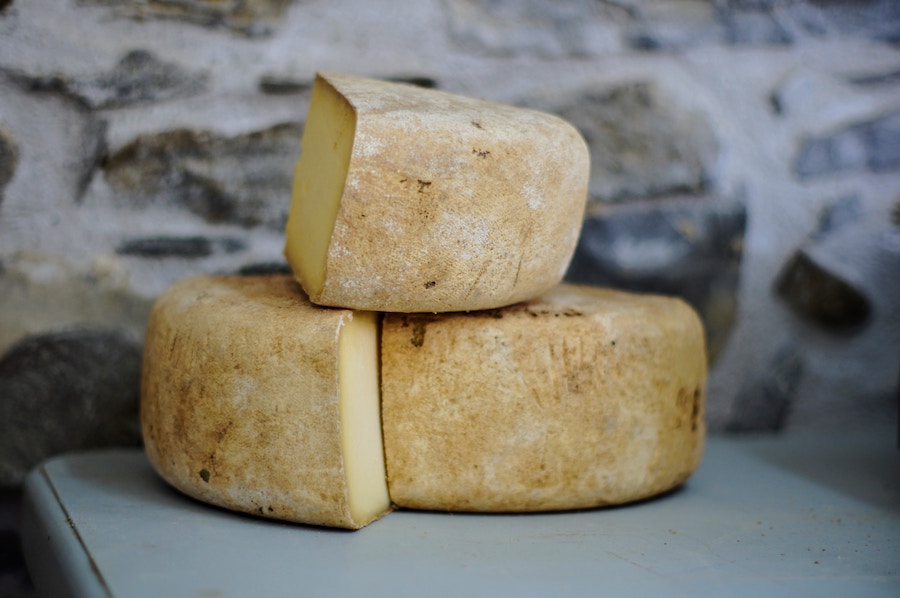
half rounds of Artisanal Cheese


Just as wine has its terroir, artisanal cheese too carries a sense of place in every bite. Terroir (a term often associated with wine) refers to the environmental factors of a region — the climate, soil, water, flora, and even the traditions — that collectively impart unique characteristics to a product. In the world of cheese, terroir is palpable. The alpine grasses and wildflowers that high-mountain cows graze on lend a Comté or Gruyère subtle hints of herbs and sweet pasture blooms. In coastal areas, salty sea breezes and mineral-rich grasses can give a faint briny tang or earthy depth to the local cheeses (for instance, some Irish cheddars or Spanish Idiazábal have nuances attributed to their maritime environment). Even when the same starter cultures are used, a cheddar made in Vermont will taste different from one made in Somerset, because the native microbes in the caves and the local feed create distinct flavor outcomes.

Many of Europe’s most famous cheeses are protected by Protected Designation of Origin (PDO) laws, which legally tie the cheese’s identity to its geographic origin. Under these schemes, only cheese made in the specific region using traditional methods and local milk can bear the name. For example, true Parmigiano Reggiano comes only from certain provinces in Italy using local cow’s milk and aging practices, and Roquefort must be made from the milk of Lacaune sheep and aged in the natural limestone caves of Roquefort-sur-Soulzon in France (Protected Designation of Origin – Wikipedia). These protections help preserve the link between place and flavor. They ensure that when you taste a slice of Manchego, you are experiencing La Mancha’s windswept plains in Spain; when you savor authentic Camembert de Normandie, you’re getting a glimpse of Normandy’s lush grasslands.

Terroir isn’t limited to wine and cheese, of course. Other gourmet delights demonstrate this connection to origin as well — consider how the finest white truffles are inextricably tied to the specific oak forests of Piedmont or how single-origin coffees express the soil and altitude of their highland farms. By appreciating the terroir in artisanal cheese, we honor the landscape behind each rind. It’s a reminder that great cheese is not a generic commodity but a unique expression of its homeland, shaped by nature and tradition.


The Future of Artisanal Cheese: Trends and Innovations
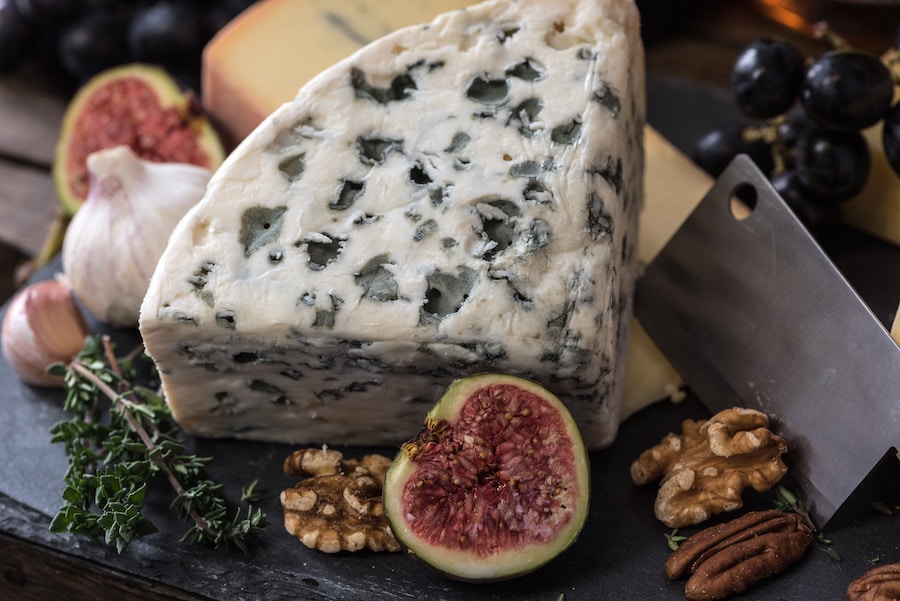
charcuterie plate with brie chess, olives, and walnut

As we look ahead, artisanal cheese-making remains vibrant and adaptive, proving that tradition and innovation can thrive together. Many small dairies are embracing sustainable and ethical practices that both respect age-old methods and meet modern challenges. For instance, it’s increasingly common for artisan producers to use rotational grazing, moving their herds frequently through pasture. This not only keeps the animals stress-free and healthy, but also improves soil health, encourages biodiversity in the fields, and can even help sequester carbon in the soil. Such eco-conscious practices show how artisanal cheese producers often act as stewards of the land, prioritizing environmental sustainability as part of their craft. Similarly, historic aging caves and cellars are being repurposed or designed to be energy-efficient (using natural insulation or renewable energy to maintain the ideal aging climate). Animal welfare is another focus — cheesemakers know that happy, healthy herds produce the highest quality milk, so they pay close attention to feed, comfort, and even individualized care for their cows, goats, or sheep.

a round of artisanal cheese, branded


At the intersection of tradition and science, new trends are emerging on cheese boards. Some noteworthy developments and innovations include:

  • Hybrid Rinds: Creative affineurs are experimenting with cross-styles, such as washing a bloomy Camembert-style cheese in local cider or gin botanicals. The result is a hybrid rind that fuses the creamy texture of a Brie with the fruity, funky notes imparted by the wash, leading to entirely new flavor profiles.
  • Plant-Based Artisanal Cheese: Even the dairy-free crowd can now experience artisan “cheese.” Nut milks (like cashew or almond) are being cultured and aged in ways that mimic dairy cheese production. For example, cashew-based “brie” wheels are wrapped in traditional spruce bark or inoculated with mold cultures, yielding surprisingly similar textures and flavors to their dairy counterparts. While these vegan cheeses aren’t identical to milk cheese, they represent an innovative frontier expanding the definition of artisanal cheese.
  • Blockchain Traceability: In response to consumer demand for transparency, some cheesemakers and retailers are leveraging technology to tell the story of each wheel. Scanning a QR code on the package might reveal the farm where the milk came from, the name of the cheesemaker, the date it was made, and even the flora of the aging cave. Companies in Europe have begun using blockchain records to guarantee the provenance of cheeses and other foods, allowing enthusiasts to trace their cheese’s journey from pasture to platter (blockchain tech lets consumers trace cheese origin). This not only satisfies curiosity but also reinforces trust in product quality and authenticity.
  • Climate-Adaptive Breeds: Climate change poses challenges to dairy farming (heat stress can reduce milk yield and alter milk composition), so cheese producers are adapting. In some hot regions, farmers are breeding more heat-tolerant dairy animals to secure the milk supply as summers get warmer. For example, crossbreeding Holstein cows with hardy local breeds has produced “slick coat” cows that thrive in tropical climates and continue to give ample milk even in high heat (breeding thermal-resistant cows increases milk production in heat). Likewise, heritage goat breeds known for drought or heat tolerance are gaining attention. By investing in climate-resilient herds, these producers aim to sustain cheesemaking traditions in the face of global change.

In many ways, the future of artisanal cheese is a dialogue between science and tradition. Time-honored practices are being examined and, where helpful, enhanced by modern knowledge — all without losing the soul of the craft. Expect to see continued emphasis on sustainability (low-waste packaging, renewable energy on farms, zero-waste policies that turn whey byproducts into new foods), as well as a renaissance of local cheese varieties in developing regions. As consumers, supporting artisanal cheesemakers — whether by buying local farmhouse cheeses or seeking out PDO-labeled imports — helps keep these traditions alive and encourages innovation.

Hand-crafted cheeses truly are edible time capsules. They condense pasture grasses, microbial synergy, and human skill into flavors that factory-made products simply can’t replicate. By selecting, tasting, and pairing artisanal cheeses thoughtfully, we pay homage to the landscapes and people behind each wheel. Just as exploring a specialty coffee from bean to cup can deepen your appreciation for your morning brew, delving into artisanal cheese opens up a world of history, culture, and taste. Whether you’re hosting a picnic in the park or curating an elegant cheese tasting at home, let curiosity be your guide — because the more we explore the realm of cheese, the richer and more delicious our culinary world becomes.

Cocktails Reborn: Exploring the Renaissance of Classic Concoctions

0

Classic cocktails have circled back into the limelight, transforming drinks menus from Tokyo to New York and inspiring at-home enthusiasts to dust off their shakers. Their return is more than nostalgia; it’s a full-scale renaissance driven by bartenders who respect history yet relish innovation—akin to how vintage vinyl records have come back into vogue among music aficionados. Whether you sip a perfectly chilled Martini or prefer a low-ABV Spritz, you’ll discover why classic cocktails endure and how they continue to evolve.


The Golden Age of Cocktails: Prohibition and the Birth of Classics

Between 1920 and 1933, the United States banned the manufacture and sale of alcohol – a period known as Prohibition. Paradoxically, that restriction sparked an outpouring of creativity behind clandestine bars. Bootleg spirits tasted rough; bartenders disguised imperfections with sugar, citrus, and bitters. Thus, the Bee’s Knees cocktail married bathtub gin with honeyed lemon to mask the gin’s harshness, while the Southside added mint to temper harsh grain alcohol (a trick said to originate in gangster-era Chicago).

Speakeasies became laboratories for now-classic libations like the Martini, Manhattan, and Negroni—drinks that balanced simplicity with sophistication. Many recipes traveled overseas as American bartenders found work at London hotels such as The Savoy; Harry Craddock’s 1930 Savoy Cocktail Book would immortalize hundreds of Prohibition-age formulas still referenced today.

Take-home technique: Classic high-proof cocktails depend on precision dilution. Stir for about 20–30 seconds with ice that’s cold, clear, and dense to chill without over-watering. Using large, crystal-clear ice cubes (free of cloudy air pockets) chills the drink effectively while melting more slowly – keeping your cocktail cold without watering it down.


Mid-Century Elegance: The Revival of Sophisticated Sipping

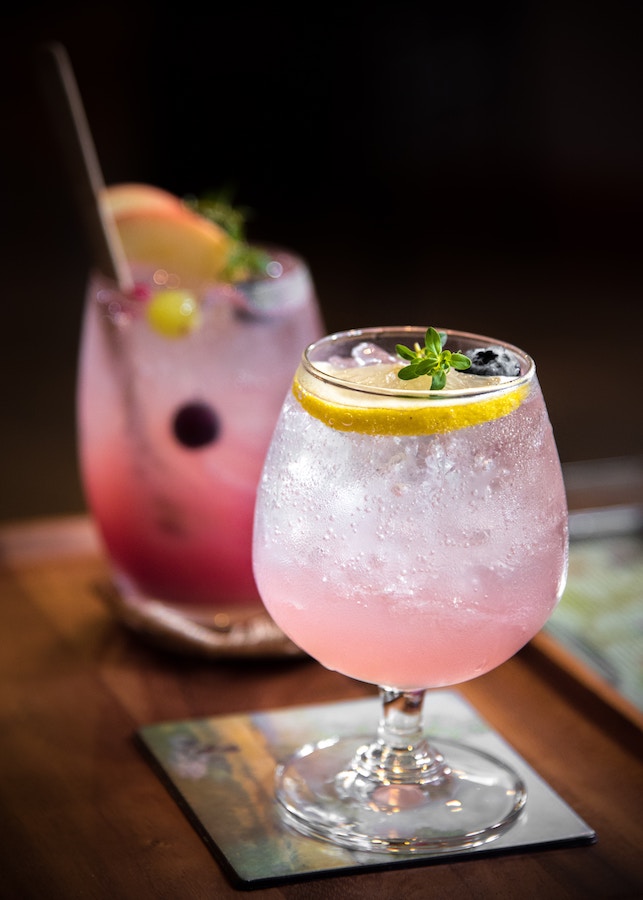
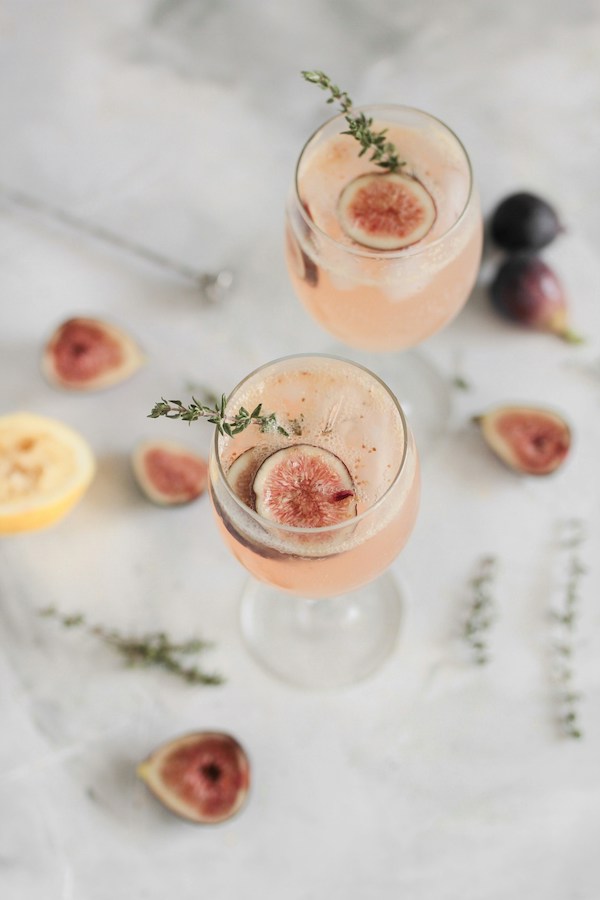
two pink cocktails with fig slices on top

By the late 1940s, hard times had eased, and Americans celebrated with gleaming steel shakers and walnut dry bars. Enter the Vesper, immortalized by Ian Fleming in Casino Royale, and the rich, creamy Brandy Alexander served tableside at New York’s St. Regis. Mid-century bars stressed ritual: a frosted coupe, a citrus twist cut razor-thin, a bartender in a white dinner jacket. That mise-en-scène is being revived today in cocktail dens such as Bar Hemingway in Paris and Atlas in Singapore, where glassware, lighting, and background jazz evoke tuxedo-era glamour.

Modern tip: Recreate mid-century texture by double-straining shaken drinks—once through a Hawthorne strainer, again through a fine-mesh sieve—to keep ice shards and mint flecks out of delicate foam. This extra step ensures a silky-smooth Brandy Alexander or Clover Club without any icy grit, as taught by Difford’s Guide.


Crafting Classics: Techniques and Ingredients

a pink cocktail with lemon and ice

A renaissance means revisiting technique. Stirring is for spirit-only builds (Martinis, Negronis, Old Fashioneds); shaking is for recipes containing juice, dairy, or eggs. Muddling releases herb oils for a Mojito but can over-extract bitterness if done too aggressively. Ingredient quality has skyrocketed in the past decade. Many bars now stock small-batch vermouths, house-made orgeat, and region-specific bitters (Spanish orange bitters, Bolivian cacao bitters, etc.) to refine classic recipes. Crystal-clear block ice—often hand-cut with Japanese ice saws—melts slower, preserving balance in spirit-forward drinks.

DIY upgrade: Batch vermouth and bitters into a labeled atomizer. One spritz inside a chilled coupe perfumes a home Martini without excess volume, an insider trick straight from the European Bartender School.


The Cultural Impact of Classic Cocktails

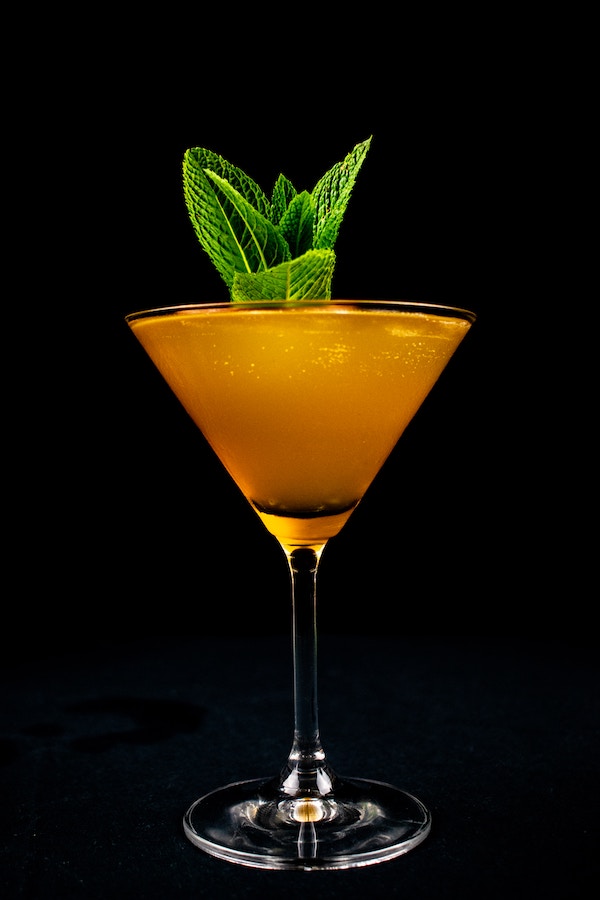
an orange cocktail with mint on top

Films, books, and television solidified the cocktail as cultural shorthand for sophistication. Think of Humphrey Bogart’s Rick Blaine pouring French 75s in Casablanca or Don Draper nursing Old Fashioneds throughout Mad Men. Each portrayal reinforces certain values—rebellion, refinement, power—that transcend the glass. Socially, cocktails remain conversation starters. Ordering a Sazerac can spark discussion on New Orleans history; choosing a Sidecar might prompt a friendly debate over cognac vs. Armagnac. These shared stories connect strangers, turning the bar into a communal living room, just as a well-chosen luxury cigar can ignite storytelling.


The Global Influence of Classic Cocktails

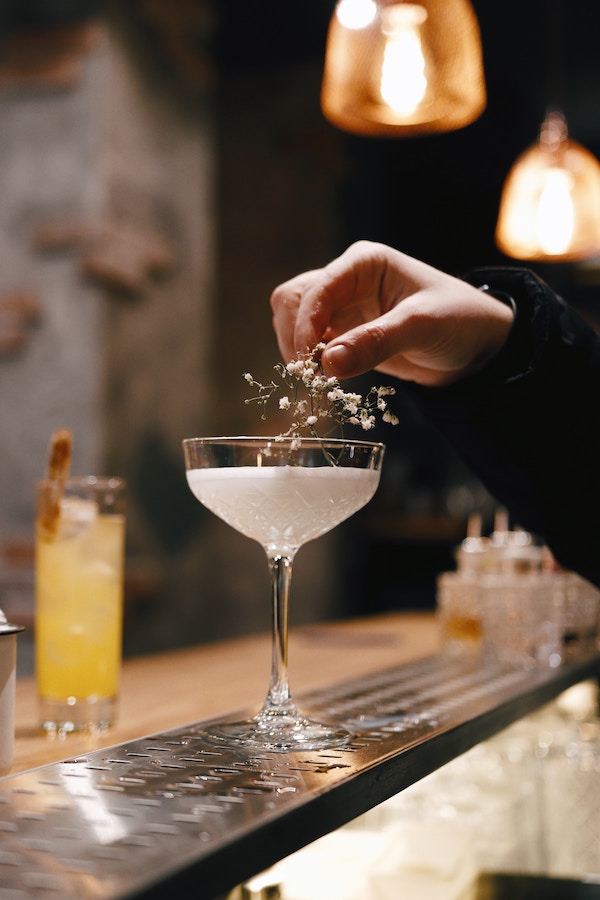
a cocktail with some flowers

As bartenders migrate, recipes morph. In Oaxaca, agave-based mezcal stands in for rye whiskey in the “Oaxacan Old Fashioned.” Tokyo’s Ginza bars employ local yuzu citrus instead of lemon in a Whisky Sour, lending a perfumed acidity. Meanwhile, Caribbean mixologists substitute homemade falernum syrup for simple syrup in Daiquiris. International competitions such as Diageo World Class encourage this cross-pollination of ideas and techniques. Bartenders trade methods—clarification, milk-washing, sous-vide infusions—propelling classics into new cultural contexts without erasing their DNA.


Revolutionizing Classics: Contemporary Twists on Traditional Recipes

three cocktails next to each other, orange, yellow, and red

Just as haute cuisine reinvents heritage dishes (gourmet cuisine’s evolution), mixologists apply modern technique Just as chefs transform classic cuisine with modern techniques in fine dining (as seen in our guide to gourmet cuisine’s evolution from classic to modern), bartenders are putting inventive spins on old-school cocktails. For example:

  • Smoked Negroni – Equal parts gin, Campari, and sweet vermouth rested in a small oak barrel, then served under a bell jar of hickory smoke for an earthy twist on the classic.
  • Clarified Ramos Gin Fizz – The traditional cream and egg white are milk-washed (clarified with milk and citrus) to yield a crystal-clear drink that still has the silky mouthfeel of meringue.
  • Sous-vide Old Fashioned – Bourbon infused at 55 °C with cocoa nibs and charred orange peel for two hours (using sous-vide precision), then strained and served over a smoked-maple ice cube.

These innovations rely on culinary science but respect the original ratios and spirit of the drinks—proof that classics are templates, not museum pieces. The same philosophy guides the evolution of haute cuisine, where chefs reimagine heritage dishes without losing their soul, much like mixologists do with cocktails.


Sustainability and Ethics in Cocktail Creation

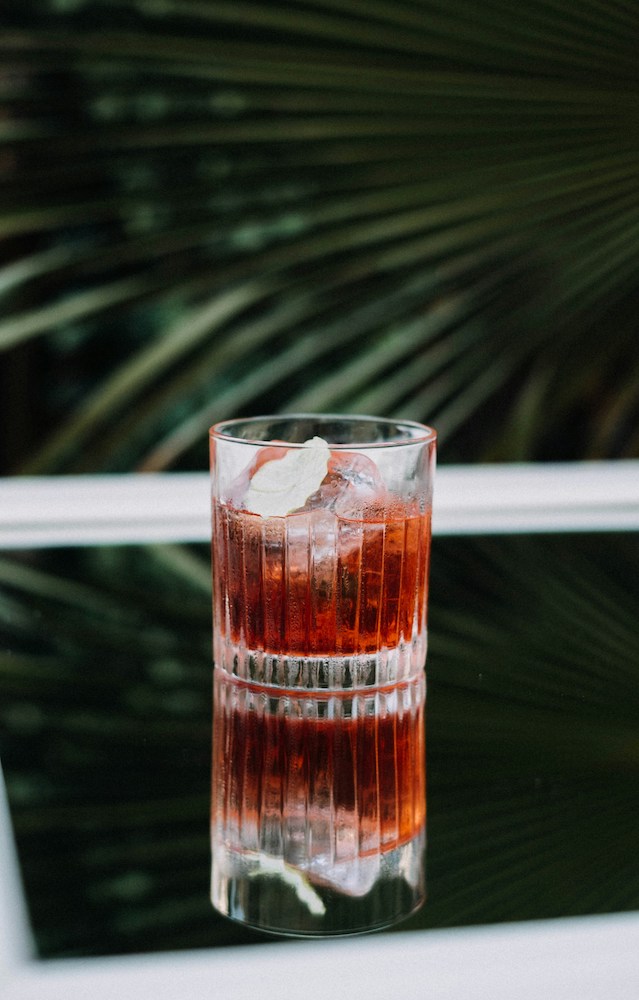
a red cocktail with ice

Eco-minded bars are finding creative ways to reduce waste. Citrus peels, for instance, aren’t just tossed; they’re turned into oleo-saccharum (by macerating spent peels in sugar to extract fragrant oils) for use in syrups and punches. Some venues even replace imported limes with verjus made from local unripe grapes – a farm-to-bar swap that cuts the carbon footprint of shipping citrus. Bars like London’s acclaimed Scarfes Bar have begun to quietly note the carbon impact of each drink on the menu, nudging patrons toward low-impact spirits and ingredients. Fair-trade rum, organic gin, and zero-plastic garnishes speak to a modern audience that values ethical sourcing as much as flavor. Even the ice program can be made greener: progressive cocktail bars reclaim melted ice water to rinse bar tools, saving dozens of liters per week that would otherwise go down the drain.


The Role of Classic Cocktails in Modern Social Settings

a cocktail, mojito, being poured into a glass

In cities where remote work blurs home and office, the ritual of a 6 p.m. Martini helps reestablish work-life boundaries (laptop closed at cocktail hour!). Corporate networking events lean on perfected classics (Champagne Cocktails, Boulevardiers) to signal hospitality and good taste. Weddings still toast with French 75s because the blend of sparkling wine and botanical gin bridges tradition and festivity in one elegant flute. Meanwhile, pop-up bars and rooftop cinemas build entire themed experiences around a single classic drink: an Aperol Spritz rooftop terrace in summer, a cozy Irish Coffee chalet in winter. By anchoring events to a familiar cocktail, organizers tap into collective memory and instantly set a tone — whether it’s celebratory, nostalgic, or just plain convivial.


Educational Aspects and Appreciation of Classic Cocktails

a red cocktail with blueberry

Demand for knowledge has exploded. Aspiring mixologists can now take online courses from institutions like the European Bartender School, read printed zines from Difford’s Guide, or attend ticketed “Cocktail Academy” workshops where guests practice proper shaking and stirring before enjoying a three-course pairing menu. Storytelling also elevates the sip: a bartender describing how the Sidecar emerged from 1920s Paris motorcycle culture can turn a £14 drink into an immersive history lesson. Many enthusiasts keep tasting journals, noting which gin works best in their Negroni or recording the bottling date of a house-made grenadine syrup—mirroring wine tasting’s reflective approach to flavor and provenance.


The Health and Wellness Perspective in Cocktail Consumption

an orange cocktail with lime and rosemary

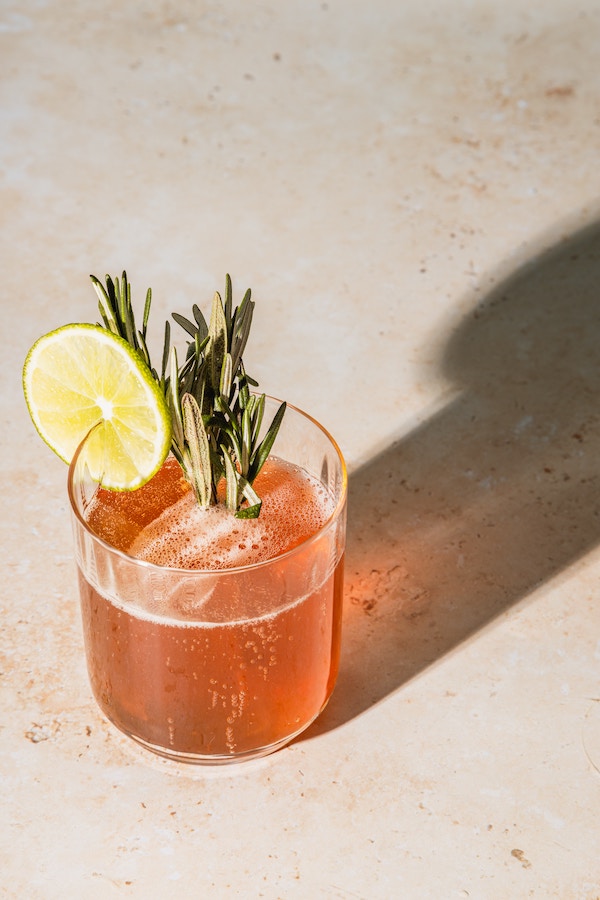
“Less but better” defines the current wellness ethos in drinking. Low-alcohol classics such as the Americano (Campari, sweet vermouth, soda) or the Sherry Cobbler offer complexity without a high ABV punch. And thanks to a new wave of non-alcoholic spirits like Seedlip, even the sober-curious can enjoy a gin’s botanical snap or a rum’s molasses depth in their glass. Bars are also adopting mindful service practices: you’ll often find a chilled water carafe on every table, menus listing the sugar content of cocktails, and staff trained to suggest “session” drinks that are lighter in alcohol. This transparency and hospitality ensure you can savor the experience without guilt — and without the next-day regret.


Conclusion: Celebrating the Timeless Elegance of Classic Cocktails

a cocktail viewed from the top

Classic cocktails endure because they balance art and arithmetic in equal parts: history, technique, and sensory pleasure. Their current renaissance shows no sign of fading; indeed, every freshly cracked block of clear ice and every responsibly sourced garnish breathes new life into century-old formulas. Raise a chilled coupe to the bartenders who preserved the past, the innovators who are shaping the future, and the enthusiasts who keep ordering these drinks — ensuring that, in another hundred years, someone will still stir a Manhattan and marvel at its timeless grace. Cheers to the perpetual dance between tradition and reinvention that makes the world of classic cocktails an ever-fascinating sip.

Gourmet Cuisine: The Evolution From Classic Techniques to Modern Gastronomy

Gourmet cuisine has always mirrored the era in which it is prepared—absorbing new ingredients, adopting fresh techniques, and responding to shifting cultural values. From the refined sauces codified by Auguste Escoffier to Ferran Adrià’s olive-oil caviar, the field continually reinvents itself while honoring its past. Just as haute cuisine reinvents heritage dishes (gourmet cuisine’s evolution), today’s mixologists apply modern techniques to classic cocktails—both reimagining tradition with innovation. Tracing gourmet cuisine’s journey illuminates how chefs blend tradition with experimentation, why diners value presentation as much as flavor, and how sustainability and technology are redrawing the boundaries of fine dining.


The Roots of Gourmet Cuisine: Classical Techniques and Iconic Dishes

a plate of a Gourmet Cuisine

Classic French kitchens forged many standards still practiced globally. Marie-Antoine Carême revolutionized French cooking by introducing towering pièces montées (elaborate pastry sculptures) inspired by classical architecture. He also instilled a spirit of structure and organization in the kitchen—many modern culinary practices like mise en place (everything in its place) and the brigade system trace their lineage to Carême’s kitchens. Auguste Escoffier later built on this foundation, simplifying and codifying French cuisine. He famously codified the five “mother sauces”—béchamel, velouté, espagnole, hollandaise, and tomate—which became the litmus test for ambitious chefs. Mastering these bases was (and is) essential; nearly every sauce in classic cuisine stems from them.

Even seemingly modern tools echo classical principles. Sous-vide cooking, for example, uses precise low-temperature control, a concept not far removed from the classic bain-marie poaching method. And iconic dishes remain valuable teachers: preparing a perfect Coq au Vin (wine-braised chicken) imparts lessons in low-and-slow braising, while crafting a delicate Mille-Feuille (thinly layered pastry) demands an understanding of lamination and texture. These classics endure on contemporary menus not just for nostalgia, but for the timeless techniques and balance they teach in seasoning and structure.


The Influence of Cultural Diversity on Gourmet Cuisine

various colorful plates of Gourmet Cuisine


Global migration and cultural exchange have turned metropolitan kitchens into laboratories of cross-pollination. Japanese chefs who trained in France have brought dashi broth’s clarity to French consommés, while Peruvian cooks fused Andean chili peppers with Japanese knife work to birth Nikkei cuisine, a fusion of Japanese and Peruvian culinary elements. What was once labeled “fusion cuisine” is now a natural expression of place and identity. For instance, it’s not unusual to find a turmeric-infused beurre blanc at a brasserie in Mumbai, or miso-marinated black cod served in a Parisian bistro.

Institutions such as Copenhagen’s MAD Academy encourage chefs to look beyond Eurocentric larders, promoting indigenous and local ingredients from their own regions. This movement has chefs in Scandinavia foraging for wild herbs, in Australia incorporating native bush spices, and in Mexico City spotlighting pre-Hispanic ingredients. Cultural diversity has become the creative engine driving gourmet cuisine forward, ensuring that fine dining is as varied as the world it reflects.


The Art of Plating and Presentation in Gourmet Cuisine

a plate ready to be eaten, depicting Gourmet Cuisine

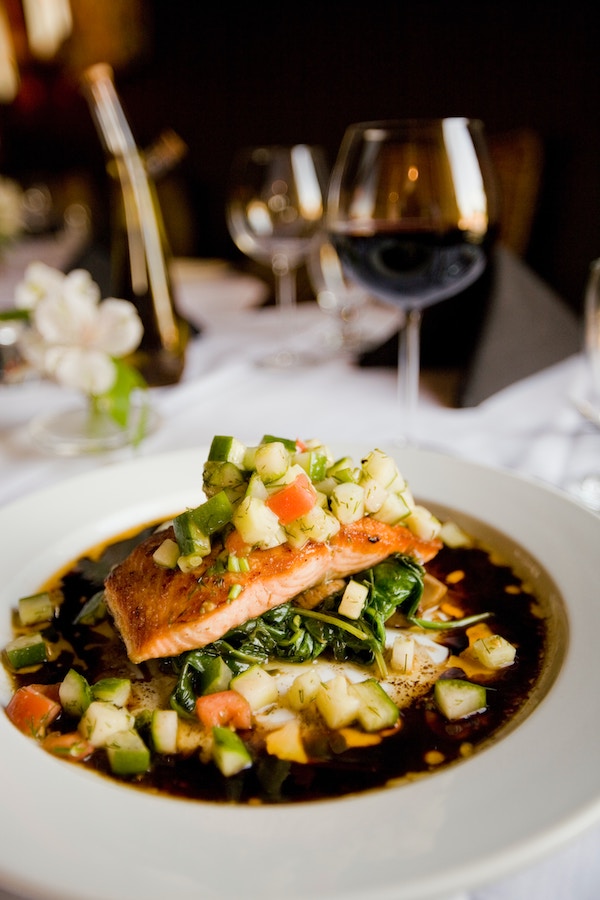
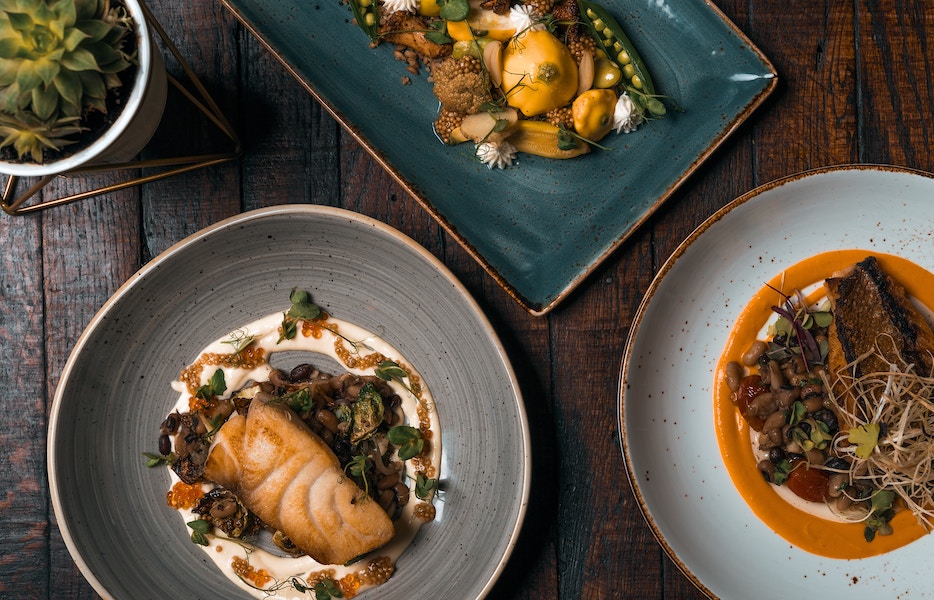
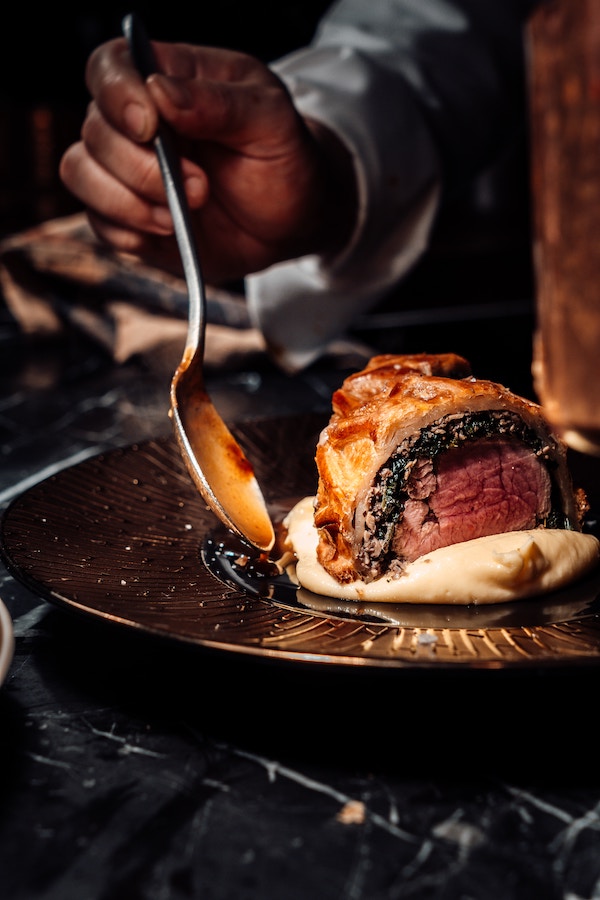
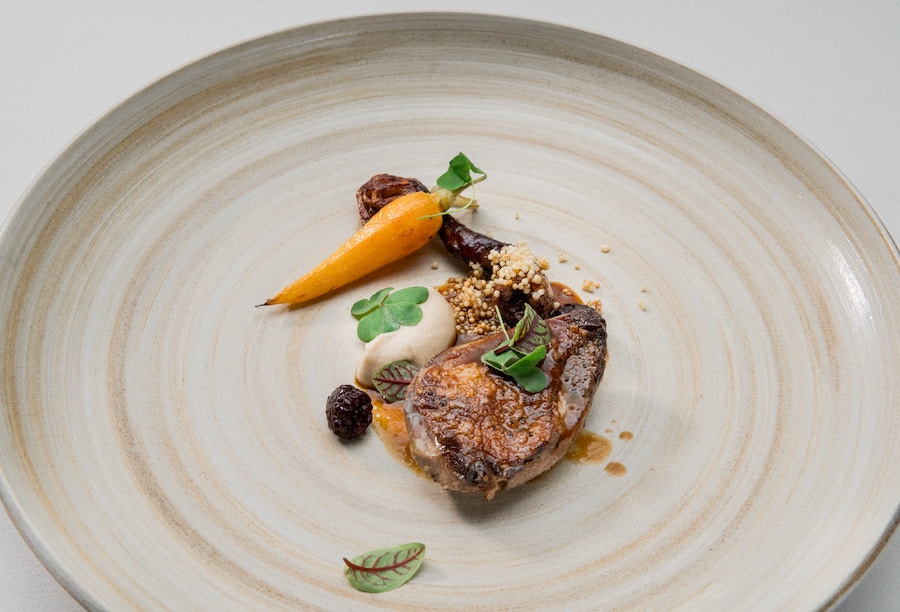
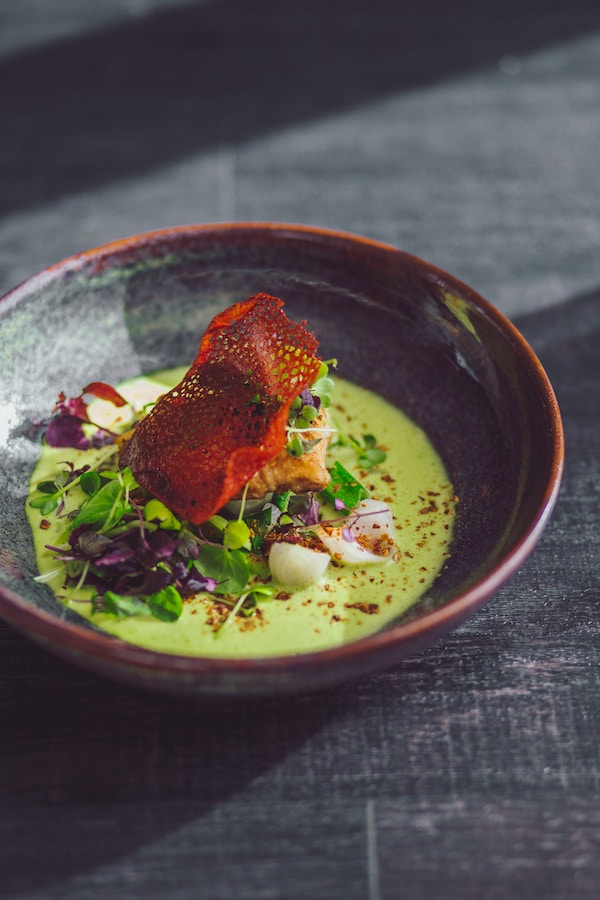
While Instagram and social media have amplified the importance of plating, visual storytelling on the plate long predates the digital age. Chefs apply design principles—contrast, negative space, and color harmony—to guide the diner’s eye and set expectations. For example, a dark slate plate can intensify the vivid green of a pea purée, just as placing bright microgreens against a deep beet sauce creates visual intrigue. Careful use of empty plate areas (negative space) gives the eye a place to rest and emphasizes each component’s elegance. Texture and height add drama too: a smooth quenelle of mousse adds curvature, whereas a crisp tuile shard can introduce an architectural element.

Beyond the food itself, fine-dining establishments orchestrate the entire visual experience. Plates and bowls are chosen to complement each dish—pristine white china to make colors pop, or rustic stoneware for an earthy theme. The ambient lighting in many dining rooms is calibrated to around 3 000 K, a warm glow that flatters food presentations without distorting their natural colors. Crystal stemware and bespoke utensils further elevate the aesthetic. In this way, a well-plated dish becomes a multisensory narrative: sight primes the palate before the first bite, and each subsequent course continues the story.


The Role of Wine and Beverage Pairings in Gourmet Cuisine

a chef preparing a plate of Gourmet Cuisine

In gourmet dining, a thoughtful wine or beverage pairing elevates each course from a dish to a full experience. Sommeliers employ two main strategies: flavor bridges and contrasts. A congruent pairing builds a bridge by matching shared flavor compounds or notes between food and drink, thereby amplifying those overlapping qualities. For example, a mushroom risotto might pair with an earthy Pinot Noir to echo the dish’s forest-floor notes. By contrast, a complementary pairing seeks balance through contrast—using acidity, sweetness, or bitterness in the beverage to counter and enhance the food. A classic illustration is pouring a tannic, high-acid Nebbiolo with rich osso buco: the wine’s firm tannins and acidity cut through the meat’s gelatinous richness, cleansing the palate for the next bite. Likewise, a touch of sweetness in a demi-sec Champagne can temper the heat of a spicy appetizer, each sip refreshing the palate.

Modern pairings are not limited to wine. Craft beers, artisanal saké, and even zero-proof cocktails now appear on tasting menus to accommodate diverse preferences. The science behind pairing has also become more precise. Beverage directors analyze everything from the water chemistry (soft vs. mineral-rich water can subtly affect a whisky or coffee service) to the glass shape (which influences aroma delivery) to serving temperature. Every pour is deliberate: a chilled glass for a Belgian ale to showcase its effervescence, or a specific curvaceous glass for Pinot Noir to concentrate its bouquet. In the best pairings, wine (or any beverage) and food engage in a dialogue—each enhancing the other so that the whole dining experience becomes greater than the sum of its parts.


Innovations in Modern Gastronomy: Fusion and Molecular Cuisine

a view form a Gourmet Cuisine plate dish

The turn of the 21st century brought an explosion of creativity often dubbed molecular gastronomy, though many chefs prefer the term modernist cuisine. Pioneers like Ferran Adrià, Heston Blumenthal, and Grant Achatz use scientific techniques to challenge traditional notions of texture and form. Spherification, pioneered by Adrià, involves using a sodium alginate bath and calcium solution to create liquid-filled spheres that mimic caviar – for instance, olive oil or fruit juice “caviar” that bursts in the mouth. Blumenthal’s famous “Meat Fruit” presents a silky chicken liver parfait disguised as a mandarin orange, complete with a citrusy gelatin skin, exemplifying how visual trickery can enhance surprise and delight. At Alinea in Chicago, Achatz went so far as to serve an edible green apple balloon filled with helium, literally allowing diners to taste whimsy and play with their food.

Culinary borders continue to blur in delightful ways. A chef in Los Angeles might glaze Korean-style fried chicken with Mexican mole, or top a Baja fish taco with spicy gochujang aioli – combinations that would have been unthinkable decades ago but now define haute fusion. In Stockholm, a pastry chef might fold Japanese matcha powder into a classic French mille-crêpe, producing a dessert that feels both familiar and new. Such innovations prove that gourmet cuisine thrives when boundaries are pushed. Diners are encouraged to rediscover familiar flavors through unfamiliar presentations – tasting memories from new perspectives.


The Integration of Technology and Culinary Arts in Gourmet Cuisine

a view form a Gourmet Cuisine plate dish

Precision technology, once confined to science labs, now sits proudly on the kitchen counter. Sous-vide immersion circulators allow chefs to cook proteins at a precisely regulated temperature (often within ±0.1 °C accuracy) for perfect doneness edge-to-edge. In pastry and baking, combi-ovens seamlessly switch between steam and dry heat, enabling bakers to proof bread and then instantly create a crackling crust – perfect for that artisan sourdough loaf. 3-D food printers are another cutting-edge tool: these devices can pipe chocolate or sugar pastes through a nozzle, building intricate lattices and sculptures layer by layer that would be nearly impossible to achieve by hand. The result? Imagine a dessert plated with a delicate 3D-printed cocoa lattice or a coral-like sugar garnish – edible art that dazzles the eye.

Technology is also advancing sustainability and storytelling in fine dining. For example, blockchain tracking is being used to follow ingredients from source to table. A harvest of scallops off the coast of Nova Scotia can be logged on a blockchain ledger with details of when and where they were caught, and a restaurant can present this information to diners by scanning a QR code. Such transparency not only assures quality and ethical sourcing but also connects the guest to the ingredient’s journey. Meanwhile, AI-driven kitchen management systems help reduce waste by analyzing purchasing data and predicting exactly how much of each ingredient a restaurant will need, minimizing excess. High-end restaurants increasingly house fermentation labs and use smart sensors – monitoring humidity for charcuterie curing chambers or using AI vision to sort produce – blending old-world craft with new-world smart tech.

The dining room itself can become a stage for technology. Ultraviolet in Shanghai famously pairs each course with coordinated lights, sounds, and even projected imagery on the walls to immerse guests in a multi-sensory story. One moment you might be “dining” seaside with a salty breeze (fans and ocean scent diffusers working in concert), the next you’re in a forest with bird sounds and pine aromas to match a woodland-themed dish. Such integrations of digital artistry transform a meal into theater, proving that technology, when used thoughtfully, can deepen the emotional impact of dining rather than detract from it.


The Future of Gourmet Cuisine: Trends and Predictions

a chef preparing a Gourmet Cuisine plate dish

Several currents will shape fine dining over the next decade:

• Plant-Forward Luxury: Fine dining is embracing vegetables in starring roles. We’re not just talking about the occasional vegetarian tasting menu, but true vegetable-driven cuisine that appeals to omnivores. Imagine a beet-root tartare topped with black truffle shavings or a slow-roasted celeriac steak served with a velvety jus. Chefs will continue to elevate humble produce into sublime centerpieces, applying haute-cuisine techniques to plant-based ingredients in ways that satisfy the most discerning palates.
• Hyper-Local Sourcing: The concept of terroir (sense of place) will intensify. Restaurants are increasingly growing their own produce and herbs—on rooftop gardens, in on-site greenhouses, or even via indoor hydroponic farms. Some coastal eateries are exploring their own shellfish beds or underwater seaweed farms to harvest truly local seafood and greens. The idea is to provide a “taste of the restaurant’s locale” in the most literal sense. Diners may soon come to expect that the greens on their plate were picked just hours before service, mere steps away from the kitchen.
• Fermentation & Preservation Labs: The age-old arts of curing, pickling, and fermenting are experiencing a renaissance in modern cuisine. Chefs are building dedicated fermentation rooms to craft house-made miso, soy sauce, vinegars, and garums (fermented sauces) from scratch. This not only unlocks deeper umami flavors – think koji-aged steaks for extra tenderness and savoriness, or garum condiments made from vegetable trimmings – but also aligns with zero-waste ethics. By transforming “scraps” into flavorful seasoning agents, kitchens both reduce waste and discover new layers of taste. The funk and complexity of fermented foods will likely become as prized as classic French sauces in gourmet kitchens.
• Augmented Reality (AR) Menus and Personalization: Technology will further personalize the dining experience. It’s conceivable that high-end restaurants will offer AR-enhanced menus – guests might point their smartphone or AR glasses at the menu to see a 3D visualization of a dish hovering above the table. Such previews could help diners choose and even customize aspects of a dish (for example, viewing it with more or less sauce, or with an ingredient substituted). Additionally, as data about guest preferences becomes more accessible, chefs might tailor a menu in real-time. If the kitchen knows a particular guest loves spice, a dish might be plated with an extra chili element just for them. The future may blur the line between a set menu and a bespoke experience.

As climate change, technological advancement, and evolving consumer ethics continue to influence gastronomy, gourmet cuisine will adapt in kind. We can expect an ongoing dialogue between the past and the future — honoring classical methods and flavors while embracing novel ingredients, techniques, and philosophies of dining.


Conclusion: The Continual Evolution of Gourmet Cuisine – A Symphony of Flavors, Art, and Experience

From Escoffier’s codified sauces to AI-guided supply chains, from Carême’s architectural pastries to 3D-printed confections, gourmet cuisine stands as both historian and futurist. It preserves time-honored techniques even as it welcomes global influences, scientific breakthroughs, and aesthetic reinventions. Chefs orchestrate this symphony of dining: layering textures and flavors like musical notes, plating dishes as visual art, pairing wines like harmonizing chords, and infusing global sensibilities into a classic framework. Diners, in turn, become part of the performance – savoring each bite, engaging with stories behind ingredients, snapping photos of beautiful plates, and increasingly valuing ethical and sustainable practices in what they eat.
The next chapter of gourmet cuisine will likely see biology intertwine with gastronomy (think lab-cultured meats or new plant proteins), sustainability married to indulgence (luxurious tasting menus with zero waste), and digital innovation enhancing age-old hospitality. Yet whatever direction the culinary avant-garde takes, the essence remains unchanged: gourmet cuisine is about elevating eating into an act of culture, creativity, and connection. It’s a living, edible art form – one that continually evolves but forever aims to provide that unforgettable moment when flavor, aroma, texture, and visual beauty converge in a single, transcendent bite. Each era writes its own melody in this grand symphony of dining, and we, the fortunate diners, get to listen – and taste – as the music plays on.tes eating into an act of culture, creativity, and connection—one unforgettable bite at a time.

High-End Fashion Accessories: Elegance, Craftsmanship, and Iconic Style

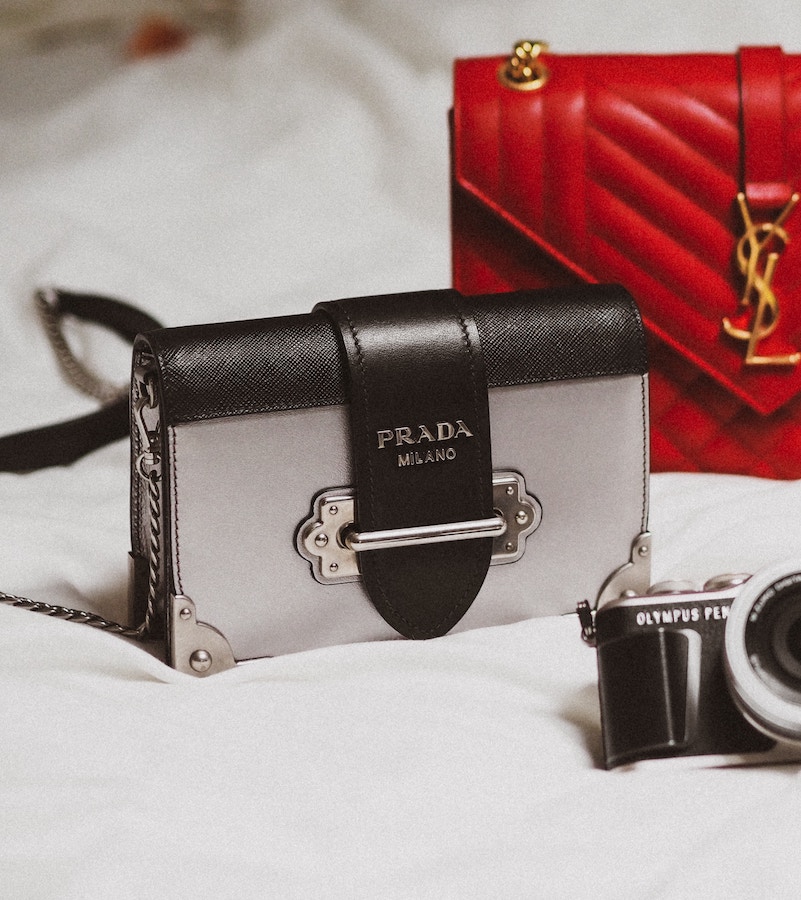
Iconic designer handbags by brands like Prada and YSL exemplify the heritage and artisanal quality of luxury accessories. In fashion’s uppermost tier, high-end fashion accessories do far more than complete an outfit. They transmit heritage, showcase artisanal mastery, and often become heirlooms that outlive the trends of any single season. From an Hermès Birkin—cut, stitched, and edge-painted by one craftsperson—to a Patek Philippe perpetual calendar refined through generations of micro-engineering, every luxury accessory embodies decades (sometimes centuries) of accumulated knowledge. This comprehensive guide explores eight pivotal categories of upscale adornment—handbags, watches, jewelry, footwear, belts, scarves, headwear, sunglasses, and small leather goods—revealing how each field fuses tradition and innovation while projecting personal identity and timeless style.


The Art of Luxury Handbags: More Than Just a Carrying Accessory

a view of luxury handbags

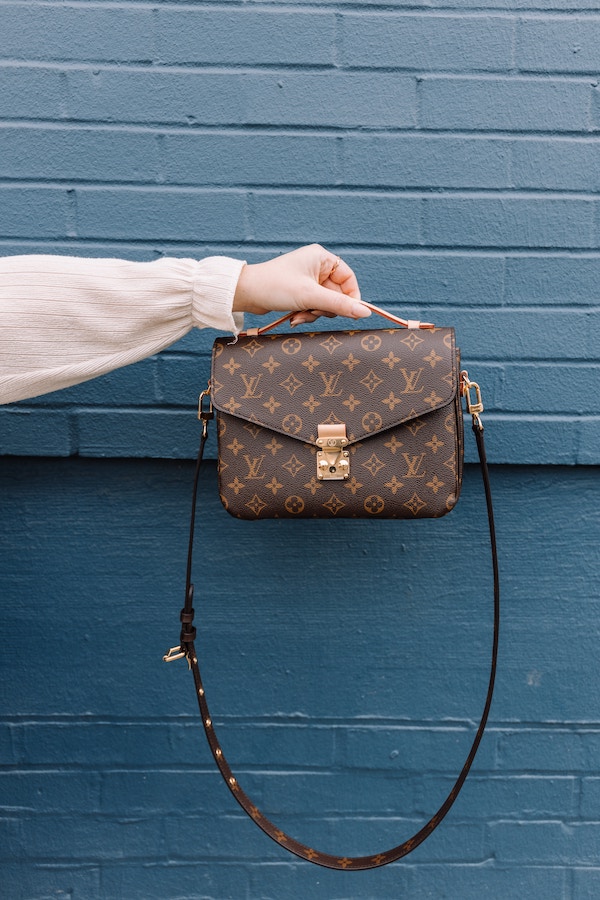
A Hermès Kelly and a Prada Cahier bag showcase impeccable leather craft and coveted design. A single Hermès Birkin bag passes through dozens of quality checks before it ever reaches a sales floor, with only the top ~10% of leather hides meeting the maison’s exacting standards. After meticulous selection, artisans lightly moisten (“parfume”) the leather to relax its fibers, then cut each piece against brass templates. The edges are hand-painted with multiple coats of dye—curing each layer for 20 minutes—to achieve the flawless piping collectors expect. Ultra-rare materials (like Himalaya Niloticus crocodile or matte alligator in Vert Céladon) may sit in vaults for years until grain patterns align perfectly across panels, a scarcity that fuels years-long waitlists and record auction prices (one Birkin famously fetched around $500,000 at auction). Yet even the canvas models from heritage brands—think Louis Vuitton’s Monogram or Goyard’s chevron Goyardine—require artisanal processes like silk-screening and hand-painted trim for their iconic patterns.
Modernity enters via functional evolution. For example, Chanel’s 19 Bag includes a clever interior chain that tucks inside, allowing it to be worn cross-body or carried by a short handle for versatility. Bottega Veneta’s The Pouch reinvents the classic clutch with a magnetized frame closure, making it easier to open and close without sacrificing its soft, cloud-like form. Meanwhile, sustainability is on the rise: laboratories at brands like Stella McCartney are developing leather alternatives such as Mylo™ (a mycelium-based “mushroom leather”) that achieve a softness akin to calfskin without animal sourcing. These innovations signal the next chapter of luxury leather craft, proving that even as they honor tradition, high-end handbags continue to evolve with the times.


Timepieces of Elegance: The Craftsmanship of Luxury Watches

a close-up view of a rolex watch

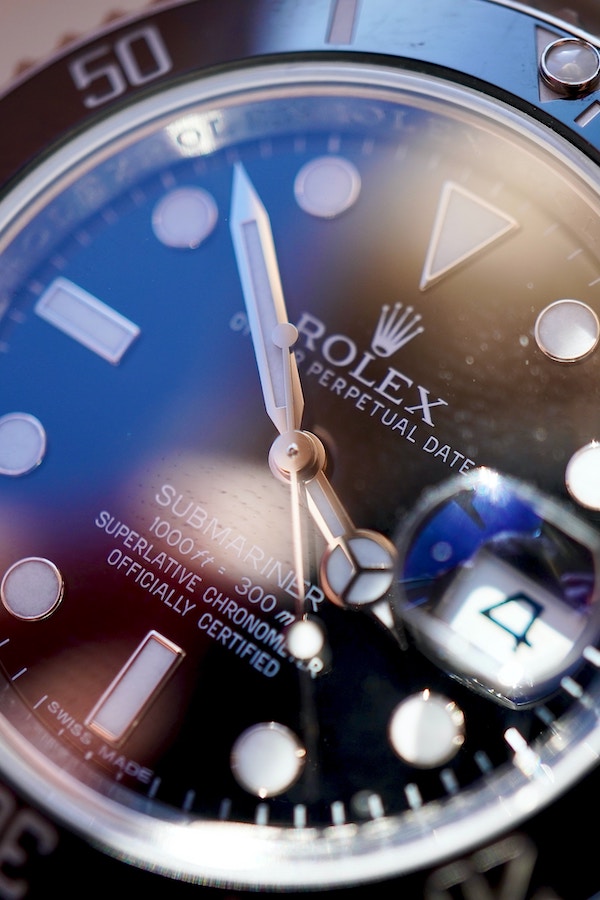
A close-up of a Rolex Submariner dial, whose “Superlative Chronometer” movement exemplifies Swiss watch precision. A high-complication mechanical watch often contains 600+ tiny parts in its movement. Jewels made of synthetic ruby are embedded at pivot points to reduce friction and wear, while bridges of German silver (an alloy of copper, nickel, and zinc) gracefully age to a mellow golden patina over decades. At Audemars Piguet’s restoration atelier in Le Brassus, master watchmakers still employ 19th-century tools and techniques—like burnishing gear pinions by hand—exactly as founders Jules Louis Audemars and Edward Piguet did in 1875. This dedication to tradition keeps alive skills that cannot be replicated on an assembly line.

Mechanical innovation continues to drive modern horology. Many haute manufacturers now use silicon escapements (for example, silicon escape wheels and levers) which eliminate the need for oil lubrication and are impervious to magnetism—a useful defense against magnetic fields from everyday electronics that can disrupt a watch’s accuracy. Jaeger-LeCoultre’s famous Gyrotourbillon takes Abraham-Louis Breguet’s tourbillon (a rotating cage that counters gravity’s pull on the balance wheel) to the next level: its cages spin on multiple axes and in all directions, minimizing timekeeping errors no matter the watch’s position. And in a nod to sustainability, brands like Panerai have introduced models using recycled metals; Panerai’s Submersible eLAB-ID concept watch, for instance, features a case, dial, and movement components made from EcoTitanium – an aerospace-grade titanium alloy with over 80% recycled content.
Discerning collectors often look for hallmarks of provenance and quality such as the Geneva Seal (stamped on movements that meet strict hand-finishing criteria), COSC certification (for chronometer-grade accuracy), or the gold lion emblem on a Grand Seiko (signifying top-of-the-line precision). On the wrist, these subtle markers telegraph more than expense—they signal the wearer’s appreciation for microns-level tolerances and movements tuned to keep time within mere seconds per day. In the realm of luxury watches, elegance lies as much in what you can’t see (the painstaking craft inside the case) as in what you can.


Statement Jewelry: Adorning Elegance

luxury jewelry

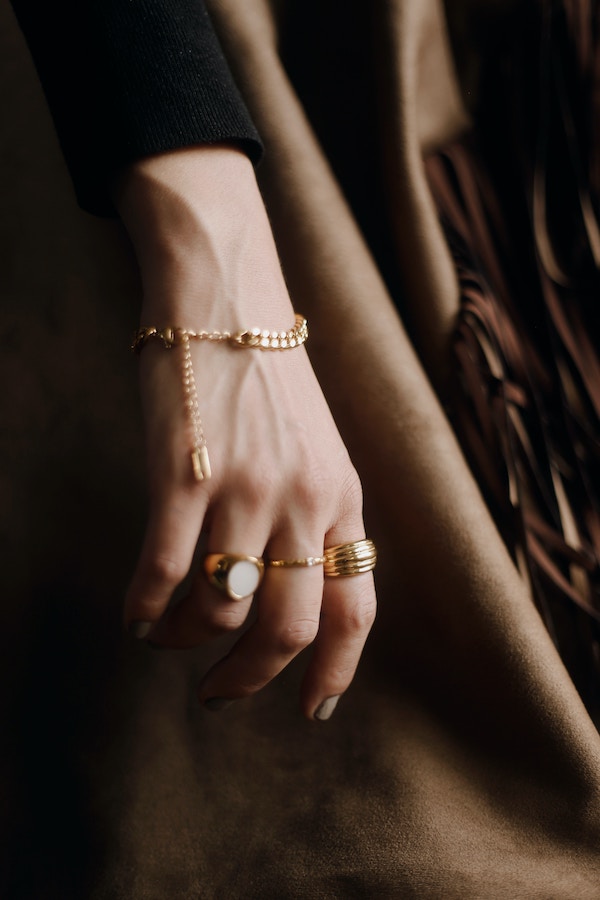
Handcrafted gold jewelry pieces, from signet rings to chain bracelets, highlight the artistry of high jewelry design. At Cartier’s High Jewelry atelier in Paris, specialist joailliers-sertisseurs (jeweler-setters) focus solely on the delicate art of setting gemstones. A ring or necklace section is often secured in heated wax or shellac on a wooden block, allowing the artisan to work with both hands free. Using gravers and beading tools, they “close the grain” around each stone—raising tiny beads of metal to grip each diamond in a pavé field. The result is a surface of gems that appear to float in place, flashing light at optimal angles. In Bulgari’s Roman workshops, innovative structural techniques (inspired by the house’s 1930s Trombino ring) allow pavé-set surfaces to undulate almost like fabric, draping the skin in a continuous shimmer.


Beyond pure aesthetics, provenance and ethics have become paramount. Leading diamond house De Beers now uses the Tracr blockchain platform to track stones from mine to boutique, creating an immutable digital record that assures buyers their diamond is conflict-free and ethically sourced. At the same time, many consumers are embracing lab-grown diamonds—chemically identical to natural diamonds but created in high-tech growth chambers—drawn by their brilliant sparkle and significantly lower environmental impact.
Personalization is another hallmark of modern high jewelry. Historic maisons offer bespoke touches like hidden engravings or convertible settings. Chaumet’s Liens collection, for example, conceals tiny surfaces where dates or initials can be engraved out of sight. Tiffany & Co. even introduced a “Map Your World” service, plotting your chosen coordinates (say, a birthplace or special meeting spot) into a diamond constellation on a pendant or ring. Regardless of passing trends, it is the jeweler’s timeless craftsmanship—filing prongs to hairbreadth precision, matching a pair of sapphires for perfect color, or shaping a millegrain edge by hand—that ultimately anchors a piece’s value far beyond its raw material worth.


Designer Shoes and Belts: The Finishing Touches to a Luxury Wardrobe

a woman with a luxury belt

A Gucci belt with the iconic double-G buckle provides a subtle status cue in a minimalist ensemble. A pair of bespoke John Lobb Oxford shoes might involve 190 separate hand processes from start to finish. The journey begins with measuring the client’s feet across eight different axes, then carving a custom wooden last. Upper leathers—whether a burnished museum calf or exotic peccary—are hand-cut and hand-stitched with waxed linen thread. Soles are often channeled, meaning the outsole leather is cut and the stitches tucked invisibly inside the groove, then pounded flat so that nothing disrupts the sleek look (John Lobb’s shoes are renowned for their closed-channel sole stitching and elegantly beveled waists). Decades later, those same shoes can be returned to the maker for resoling and refurbishment, testament to an endurance that fast fashion can’t match.
On the women’s side, even the most daring heels balance art and anatomy. Take the Christian Louboutin “So Kate” pump, famous for its 120 mm stiletto heel: its last is sculpted to distribute weight and maintain arch support at that extreme pitch, ensuring that—while certainly not sneakers—it’s possible to stand and walk elegantly in such heels without undue pain. Designers today are also improving sustainability behind the scenes: tanneries supplying top cobblers now offer vegetable-tanned leathers (eschewing chrome and heavy metals) and water-based adhesives for attaching soles. In 2021, Gucci introduced its new line of Demetra sneakers, made with an animal-free leather alternative derived 77% from plant-based sources and incorporating organic cotton, recycled polyester, and even recycled steel in their construction. These high-tops proved that eco-conscious materials can meet the house’s luxury standards without missing a style beat.
Belts, though smaller canvases, speak volumes through their details. Hermès’s famed “H” belt buckle (on the classic Constance belt) is typically crafted in a palladium-plated or permabrass finish (a proprietary brass alloy that resists tarnish), and paired with reversible calfskin straps—for example, fauve barenia on one side and black box calf on the other—to double its versatility. Versace’s Medusa buckle turns a simple leather belt into a baroque statement, instantly recognizable with the house’s mythological emblem in gold-tone relief. And for those who prefer subtlety, Celine’s Triomphe motif buckle is an insider’s nod to quiet luxury—its intertwined double-C carriage emblem (inspired by the chains around the Arc de Triomphe in Paris) is noticeable only to the cognoscenti, offering a stealth wealth alternative to loud monograms.


The Luxurious World of Scarves and Wraps

an array of luxury scarves, watches and shoes

Silk jacquard looms in Como, Italy weave 140 gsm twill for Ferragamo botanical prints. Each thread passes through heddles that lift in choreographed sequence, forming motifs even before dye. Meanwhile, Scottish cashmere mills shear Capra hircus goats in spring, collect under-fleece, de-hair, spin, and mill-wash in 6 °C soft Highland water, preserving natural lanolin. Styling versatility elevates these textiles: a 90 cm carré becomes a halter top, bag cover, or bandeau. Loro Piana’s Grande Unita scarf—70 % cashmere, 30 % silk—travels from Sahara desert evenings to Alpine après-ski. Technical functions join luxury: Burberry Hydroguard cashmere uses microporous polymer to repel droplets while maintaining loft.


High-End Hats and Headwear: A Blend of Tradition and Modernity

a woman with a luxury hat

In Alessandria, Borsalino rabbit-hair felts dry on cedar blocks before shellac stiffening, producing brims that snap back after rain. Contemporary designers re-energize millinery: Dior’s Maria Grazia Chiuri pairs bucket hats in embossed calfskin with evening gowns; Stephen Jones shapes transparent PVC crinoline for futuristic derby looks. Cultural crossover thrives: Los-Angeles–based Nick Fouquet up-cycles vintage Stetsons, branding match-stick emblems into crowns. For the 2023 Met Gala, Ukrainian designer Ruslan Baginskiy created pearl-embroidered kokoshniks referencing Slavic folklore, demonstrating hats’ ability to bridge heritage with haute couture.


Designer Sunglasses: The Intersection of Fashion and Functionality

a woman with a luxury sunglasses

Miu Miu glitter-rim cat-eyes contrast with Porsche Design screw-less milled-titanium aviators, yet both stem from rigorous optics. Carl Zeiss Vision coats lenses with 15-layer anti-reflective stacks; some incorporate photochromic dyes adjusting tint to UV within 30 seconds. React-lite nylon frames weigh under 20 grams, suited to extended wear. Luxury houses also prioritize eye health: Maui Jim PolarizedPlus2 cuts glare from snow and sea, enhancing color without bleaching. Montblanc integrates spring hinges for custom fit, and Prada Linea Rossa adds hydrophobic nano-coatings to repel sea spray—uniting performance and panache.


Exclusive Leather Goods: Crafting Elegance in Everyday Items

a hand holding a luxury leather handbag

A Berluti leather wallet undergoes patina artistry: pigments massaged layer over layer, then buffed with bone tools to mimic marble depth. Edge burnishing employs heated brass wheels loaded with beeswax, sealing fibers so seams withstand decades of pocket friction. Wallet interiors now house RFID shielding to deter data skimming, while zip pouches hide AirTag sleeves for travel security. Smythson notebook covers, hand-bound in Panama cross-grain calf, accept refills indefinitely—marrying sustainability with perpetual luxury. When wear finally appears, heritage workshops offer re-inking, color correction, and new lining at service spas—prolonging product life toward heirloom status.


From the signature turn-lock of a Chanel 2.55 handbag to the whisper-quiet tourbillon of a Vacheron Constantin watch, high-end fashion accessories celebrate craftsmanship on a miniature scale. They convert raw materials—hide, silk, metal, gem—into repositories of narrative, identity, and artistry. In an era chasing eco responsibility, top houses adapt with lab-grown diamonds, bio-based leathers, and transparent supply chains while guarding the hand-finish standards that define luxury. Investing in a fine accessory thus becomes both aesthetic pleasure and cultural stewardship. Each stitch, facet, and patina honors artisans whose knowledge is transmitted through apprenticeships rather than automation. Whether one selects a luminous Bulgari Serpenti cuff or opts for stealth elegance in a minimal Céline belt, the decision signals values: appreciation for quality, patience for bespoke lead times, and willingness to support crafts that anchor global fashion heritage. High-end fashion accessories will keep evolving—3-D-printed gold, AI-generated scarf patterns, recycled-ocean-plastic sunglass frames—but their core mission endures: to elevate everyday life with tangible expressions of excellence. Wear them, collect them, preserve them; above all, understand them, for they are the quiet ambassadors of style’s past and its still-unfolding future.

Home Audio Mastery: Crafting the Ultimate High-End Listening Experience

0

In luxury entertainment, no feature transforms a home like an expertly engineered home audio system. Done well, high-end components, precision room tuning, and seamless smart-home integration converge to reproduce every micro-detail of a recording—from the tactile pluck of a nylon guitar string to the sub-20 Hz rumble of an organ pedal. This comprehensive guide walks through the essentials of high-fidelity sound, the anatomy of a premium setup, and the emerging technologies shaping tomorrow’s listening rooms. Follow each section in the order audiophiles typically tackle upgrades, and discover how to turn any space into a sanctuary of sonic excellence.


Understanding High-Fidelity Sound: The Foundations of Premium Audio

a view of a room with furniture and a High-End Home Audio system

True high fidelity is an exercise in transparency: a system should add nothing and remove nothing from the source. In practice, there are three measurable pillars that define this ideal:

  1. Frequency Response: A reference-grade loudspeaker reproduces the full 20 Hz–20 kHz range within ±3 dB, ensuring thunderous bass and crystalline treble. (Room gain and boundary reinforcement will alter these targets, so in-room measurements often smooth out slight deviations.)
  2. Dynamic Range: High-resolution files mastered at 24-bit depth can hold a theoretical 144 dB of range. Low-noise DACs and amplifiers preserve that hierarchy from whisper to crescendo. Even when listening at modest 85 dB peaks, quiet passages remain unmasked by hiss thanks to that wide headroom.
  3. Time Accuracy: Phase-aligned drivers and steep-slope crossovers keep transients intact. A well-recorded rimshot should sound like wood on metal, not a softened thud.

Translating theory into practice means pairing neutral amplifiers, low-jitter digital clocks, and rigid speaker cabinets to minimize any added coloration. Reputable publications such as Stereophile post bench tests that verify these specifications, giving buyers a data-backed starting point. By understanding these measurements and how components achieve them, you can assemble a system that remains faithful to every recordingers a data-backed starting point. By understanding these measurements and how components achieve them, you can assemble a system that remains faithful to every recording.


The Components of a Luxury Audio System

a display of High-End Home Audio system

Reference-Grade Speakers: Floor-standers like Wilson Audio’s Alexx V use advanced cabinet materials (e.g., X- and V-Material composites) and internal chambers to cancel vibration, inspired by flagship models like the Chronosonic XVX. Compact monitors, meanwhile, favor inert aluminum or dense resin cabinets that “vanish” sonically when paired with a subwoofer. Exotic tweeter technologies—beryllium domes, diamond diaphragms, ribbon planars—aim to extend high-frequency response beyond human hearing, reducing distortion within the audible band.

Power and Control: Amplifiers & DACs: A Class A/B powerhouse such as the Pass Labs X350.8 can output prodigious current for difficult 2-ohm speaker loads, while modern Class D designs like Hegel’s H30A deliver around 90 % efficiency, cutting heat and power usage without sacrificing clarity. DACs have evolved from simple chipsets to discrete resistor-ladder (R2R) architectures with total harmonic distortion below 0.0005 %. These advanced DACs translate bitstreams from services like Qobuz or Roon into analog waveforms with astonishing purity and resolution.

Source Components: For vinyl enthusiasts, turntables (think SME Model 12MK2 or Technics SL-1200G) pair magnetic cartridges with dedicated phono preamps that properly equalize the tiny cartridge signals. Digital purists may run network streamers such as the Aurender N20, which buffers lossless files in RAM to eliminate network noise during playback. Many households keep both analog and digital front-ends—a nod to the resurgence of vinyl in the streaming era, combining the tactile ritual of records with the convenience of vast online libraries.

Cables & Power Conditioning: While blind tests often show only modest sonic differences between cables, premium interconnects use high-purity OCC copper and air or Teflon dielectric geometry to minimize capacitance and signal loss. Equally vital, surge-protected power regenerators or conditioners supply a stable 120 V/60 Hz pure sine wave to your gear, shielding delicate electronics from voltage fluctuations and AC line noise (the “grid hash” that can introduce hum or interference).


Design and Aesthetics: Blending Sound with Style

a view of of High-End Home Audio system

Manufacturers now treat equipment as functional sculpture. For example, Italian speaker artisan Sonus faber hand-wraps wooden enclosures in fine leather for a luxurious old-world look. Conversely, the ultra-modern Devialet Phantom’s unmissable ovoid shape could double as a piece of contemporary art, seamlessly combining acoustics with aesthetics. Finish options span from piano-black lacquer to carbon-fiber weave, allowing systems to complement anything from minimalist lofts to ornate libraries.

Interior designers often collaborate with integrators to hide the technology without compromising performance. Electronics can be tucked into ventilated credenzas or mounted in dedicated racks cooled by whisper-quiet fans. Custom grille fabrics are color-matched to a room’s upholstery, and even motorized artwork can conceal wall-mounted speakers or TVs when not in use. The result is that high-end audio becomes an architectural feature, not an eyesore—adding visual harmony to its sonic excellence.ent of your home’s design narrative—much like selecting luxury rugs to define a living space.


Integrating High-End Audio into Smart Homes

a view from a room with a High-End Home Audio system

Voice assistants and automation hubs extend luxury from pure sound quality to frictionless control of the listening experience:

  • Voice & App Commands: Lutron keypads, Apple HomeKit scenes, or Crestron touch panels can trigger music, lighting, and motorized blinds simultaneously—ideal for late-night sessions where a single tap or voice command dims the lights to 15 %, closes the drapes, and starts a jazz playlist at a comfortable volume.
  • Multi-Room Synchronization: Lossless multi-room protocols such as BluOS and UPnP can stream 24-bit/192 kHz audio over Wi-Fi to every room, keeping the kitchen and den in perfect sync without drops. Wander between rooms and hear the same song without missing a beat or sacrificing quality.
  • User Profiles: Advanced processors (like the Trinnov Altitude series) let each family member recall personalized room-correction profiles, which tailor the EQ, preferred source, and volume limits to individual tastes or hearing. A “Dad” profile might enable a subtle bass boost and limit maximum volume, while a “Movie Night” profile could activate surround sound and dim the lights.

This synergy means your system is no longer confined to one sweet spot; it permeates daily life. Music follows you through the house, adjustable by simple commands, making the entire home a seamless sonic environment.


Acoustic Optimization: Perfecting Your Listening Environment

luxury bose speaker

Even the best gear can falter in an untreated room. Rectangular spaces create standing waves (resonant bass modes) at predictable frequencies given by the formula f = 1130 ft/s / (2 × room dimension). For example, a 20 ft length will produce a strong room mode around 28 Hz (1130/40 ≈ 28), which can cause boomy bass. Adding digital room correction or installing bass traps in the corners helps tame these low-frequency resonances.

First Reflection Control

To preserve imaging clarity, it’s critical to address first reflection points on the side walls and ceiling. Soft acoustic wall panels placed at the “mirror” points (where you would see the speaker in a mirror from the listening position) can reduce early reflections by up to 15 dB, sharpening stereo focus. Meanwhile, diffusers—such as quadratic residue panels or skyline blocks—scatter mid- and high-frequency energy in many directions, enlarging the perceived soundstage without overdamping the room. Treating these first reflection areas ensures that what you hear is the direct sound from the speakers, with minimal blurring from quick wall reflections.

Floor & Ceiling Treatment

Floor and ceiling surfaces also play a role in acoustics. Plush rugs or cork underlayment on hardwood floors help curb “slap echo” (the pinging reflection you hear in an empty room), while suspended acoustic ceiling clouds absorb flutter echo from above. Additionally, using high-mass, well-sealed doors and double-stud or staggered-stud drywall construction can block sound from bleeding between the listening space and adjacent rooms. In this way, your listening sanctuary stays quiet and isolated – and the rest of the family isn’t disturbed by your late-night sessions.

Finally, a handheld measurement microphone and free software like REW (Room EQ Wizard) can visualize your room’s frequency response in detail. By measuring and applying corrections, hobbyists can often tune their rooms to within ±5 dB of flat from 20 Hz to 20 kHz—essentially professional-grade accuracy at modest cost. Investing in acoustic treatments and calibration yields performance gains on par with major equipment upgrades, often at a lower cost.n-room accuracy that rivals dedicated studios, ensuring every recording plays back with lifelike fidelity.


Customization and Personalization in High-End Audio

small High-End Home Audio system

The luxury audio experience can be highly personalized. Many ultra-high-end brands offer custom cosmetic options – for instance, monogrammed amplifier faceplates or loudspeaker veneers matched to a client’s high-end interior design. Wilson Audio’s flagship Chronosonic XVX allows buyers to select from an automotive-grade palette of paints, even offering custom color matching so your speakers can precisely coordinate with, say, a specific Porsche or Rolls-Royce finish. Such bespoke finishes are applied with spectrophotometer precision and automotive lacquer techniques, resulting in one-of-a-kind showpieces.

Sound profiles are also tailor-made. French company Devialet provides an online Expert Pro Configurator tool that lets you input your exact phono cartridge model or specs; the system then uploads firmware to optimize the loading and equalization for that cartridge. In practice, this means each vinyl setup can be dialed in to the owner’s cartridge capacitance, resistance, and gain needs at the software level. Beyond hardware tweaks, advanced software like Dirac Live allows users to create custom FIR filters based on listening position—whether it’s a single “sweet spot” chair or a large sectional sofa—ensuring everyone enjoys the same balanced sound. Together, these trends mean no two high-end systems need to look or sound exactly alike; they can be uniquely tuned to both your aesthetic and your ear.


Investing in High-End Audio: Considerations and Long-Term Value

a view from a small High-End Home Audio system

Unlike rapidly obsoleting gadgets, well-built amplifiers and loudspeakers can perform flawlessly for 20–30 years or more. In fact, certain vintage gear appreciates in value: for example, original McIntosh MC275 tube amps (circa 1960s) had an MSRP around $444, but today a mint unit can sell for $4 000–$5 000 in the used market—a testament to their “ivy league” resale potential. When allocating your upgrade budget, consider the following guidelines:

  1. Prioritize Loudspeakers: Allocate roughly 40–50 % of your funds here. Speakers typically yield the most noticeable change in sound per dollar, so choose the pair that best fits your taste and room.
  2. Balance the Chain: Avoid bottlenecks. A $20 000 reference speaker tethered to a $500 mass-market receiver will be underutilized, just as a reference amplifier feeding budget speakers won’t shine. Strive for complementary quality at each link in the chain.
  3. Future-Proof Digital: Select DACs and streamers with modular or upgradable designs. Companies like PS Audio build DACs around FPGA chips and regularly release free firmware upgrades to add features or improve performance. Likewise, dCS’s flagship DACs (e.g. Vivaldi) have received software updates for new formats (Roon, MQA, etc.) and even hardware add-ons (improved network cards) years into their lifecycle. Investing in gear that evolves with technology can save you money in the long run.

Also, seek brands with transferable warranties and accessible service centers—they indicate a manufacturer that stands behind its product. Before big purchases, it’s wise to peruse audiophile forums like AVS Forum or What’s Best Forum for long-term owner feedback on reliability and company support. These community insights, combined with solid warranty coverage, help ensure your investment will perform (and be serviceable) for decades.lifier or speaker can deliver stunning performance for decades—and in some cases appreciate in value.


The Future of High-End Audio: Emerging Trends and Innovations

a small and spherical High-End Home Audio system

Immersive Formats: Next-generation music is moving beyond stereo into fully immersive sound. Technologies like Dolby Atmos and Auro-3D add height channels above the listener, enveloping you in a dome of sound. Even traditional music labels are joining in—for example, Deutsche Grammophon has begun releasing orchestral recordings in 7.1.4 Atmos mixes, pushing living-room speaker counts to 12 or more for full effect. For audiophiles, this means the “sweet spot” can extend in three dimensions, and installing in-ceiling or up-firing speakers may become the new norm for a truly life-like soundstage at home.

Eco-Friendly Manufacturing: Sustainability is influencing high-end audio design. Brands are experimenting with eco-conscious materials like bamboo-fiber driver cones and heat sinks made from recycled aluminum. The Dutch speaker maker Gauder Akustik even offers vegan leather alternatives for their speaker cabinets, addressing the desires of ethically-minded consumers without sonic compromise. Expect future components to emphasize green credentials—think low-power class D amps, sustainable wood or composite enclosures, and recyclable packaging—proving that high fidelity and environmental responsibility can coexist.

AI-Driven Enhancement: Artificial intelligence is being deployed to push performance boundaries. Adaptive crossovers are an emerging concept: using machine learning, future speakers could monitor their own drivers’ temperature and excursion in real time, dynamically adjusting the crossover to prevent strain or distortion. This would effectively widen dynamic range and protect components automatically. On the software side, music servers and apps are getting smarter; for instance, Roon’s DSP engine can analyze the loudness of every track in your library and apply volume leveling so that you don’t experience jumps in volume between songs. AI could also personalize sound curves to your hearing profile, ensuring optimal sound for each individual listener.

Vinyl Renaissance Meets Digital Convenience: The resurgence of vinyl has inspired products that blend analog and digital into one. A prime example is Cambridge Audio’s Alva TT V2 turntable, which includes a built-in aptX HD transmitter for 24-bit wireless streaming. This means you can enjoy the ritual of playing records, and send high-resolution audio from the turntable straight to your wireless speakers or headphones with negligible quality loss. We’ll likely see more hybrid devices like this—classic turntables with Wi-Fi/Bluetooth connectivity, tube amplifiers with digital room correction, etc.—combining the best of both worlds.

As these innovations mature, they promise to make reference-level home audio more sustainable, immersive, and user-friendly than ever. The gap between professional studio sound and home sound will continue to shrink, while the ease of accessing and controlling that sound will grow.


Conclusion: Turning Space into Sound

A high-end home audio system is equal parts science, engineering, and emotion. Precision drivers, zero-jitter DACs, and acoustically tamed rooms can recreate performances so convincingly that you feel the singer’s breath and the venue’s subtle reverb decay. But beyond the specs and measurements, truly luxurious sound is about connection—a connection to the art itself, to the craftsmanship behind each component, and to the living spaces enriched by these experiences.

Whether you favor the tactile ritual of vinyl, the instant access of lossless streaming, or the cinematic scale of a multi-speaker Atmos setup, mastering high-end audio allows you to curate moments that mass-market gear simply cannot match. Guided by accurate measurements, thoughtful interior design, and a spirit of continual learning, any room can become a private concert hall. And investing the time—and yes, the budget—into superior listening pays dividends every time you press play and a familiar track sounds breathtakingly new.

Sailing in Style: The Ultimate Luxury Sailboat Charter Guide

0

Chartering a luxury sailboat is the purest form of sailing indulgence. Wind becomes your engine, teak decks your terrace, and secluded coves your private resorts. A single week aboard can blend five-star hospitality with the thrill of plotting a course by the compass. Whether you dream of a honeymoon on turquoise Caribbean flats or a multigenerational adventure along New England’s storied coast, a chartered yacht lets you design days that move to the rhythm of the sea, not a cruise-ship schedule. Below, we retain the original structure—allure, destinations, choosing a charter—but each section now dives deeper into practical tips, insider anecdotes, and environmental considerations.

A modern luxury sailing catamaran gliding in tropical waters. Sailboats provide an intimate, eco-friendly way to explore hidden bays beyond the reach of big cruise ships.


The Allure of Luxury Sailboat Charters

The Allure of Luxury Sailboat Charters

Unparalleled Privacy and Serenity – High-end sailing yachts (from sleek super-sloops to 60-foot catamarans) carry only a handful of cabins, typically accommodating 8–10 guests. This means your party has the whole vessel to itself, deciding when to weigh anchor, which bays to visit, and how long to linger over sunset canapés. Unlike large motor yachts, sailboats slice quietly through the water under wind power, so dawns arrive not with a diesel rumble but with gulls wheeling overhead and gentle wavelets lapping the hull.

“Slow Travel” Access to Hidden Harbors – Because sailboats often draw less water (shallow draft) than mega-yachts, they can slip into secluded lagoons and coves that deeper-hulled ships simply cannot reach. Think Emerald Bay on Greece’s Meganisi or the horseshoe anchorage of Petite Anse d’Arlet in Martinique—spots too shallow or narrow for cruise ships. Many of these havens lack road access entirely, preserving their charm for those who approach under canvas. With a shallow-draft yacht you can literally sneak into bays no one else can reach, discovering pristine beaches and quiet fishing villages untouched by larger vessels.

Tailored Experiences, From Deck Yoga to Michelin-Level Dining – Luxury charter brokers pair guests with crews versed in specific passions: wellness, fine wine, gourmet cuisine, water sports, you name it. One yacht might carry a certified dive instructor and onboard compressor; another might boast a French chef trained at Le Cordon Bleu. Weeks before embarkation you’ll complete a detailed **preference sheet **– noting everything from favorite grape varietals and children’s snack allergies to preferred pillow firmness – so the crew can stage seamless, personalized service. No detail is too small: whether it’s a murder-mystery theme night or a specific brand of suntan lotion, “no request is too large nor detail too small”. The result is a bespoke experience curated entirely around your tastes.

Onboard Luxury Equal to Top Hotels – Contemporary sailboats feature amenities rivaling five-star resorts. Think king-size berths and fine linens in airy staterooms, en-suite bathrooms with rainfall showers, climate control and Wi-Fi, and stabilizing keel or foil technology to minimize heeling under sail. Many crewed catamarans have expansive flybridge decks – some even equipped with hot-tub Jacuzzis on the upper deck – while sleek carbon-fiber sloops may sport fold-down swim platforms and “beach club” transoms that let you swim right off your cabin. Tenders (small boats stored aboard) can tow inflatable slides, and a full toy chest often includes Sea-Doo scooters, Seabob underwater propulsion devices, stand-up paddleboards, and even electric hydrofoil surfboards (e-foils). In a quiet anchorage, your crew can deploy these gadgets to turn the cove into a private aquatic playground for you and your guests.

Eco-Conscious Mobility – Perhaps most impressively, a sailboat charter lets you travel in luxury while leaving a lighter footprint. Whenever the sails are up, fuel burn drops dramatically. Advanced green yachts use hybrid systems: for example, the 43 m Baltic 142 Canova is equipped with a regenerative hydro-propulsion system so that while the yacht is sailing, the freewheeling propeller acts as a generator to charge six lithium-ion battery banks. In practical terms, this means the yacht can run its galley appliances and even overnight air–conditioning in “quiet mode” off battery power, without needing to fire up a generator. Charter crews also follow strict sustainability protocols: they separate and recycle waste onboard, use eco-friendly cleaners (like vinegar-based solvents and biodegradable soaps) that won’t harm marine life, and rely on watermakers (desalinators) for fresh water to avoid single–use plastic bottles. In short, you enjoy guilt-free indulgence under sail, knowing your voyage treads lightly on the oceans.


Popular Sailboat Charter Destinations

Popular Sailboat Charter Destinations

The Mediterranean: The Old World offers an endless coastline of culture and coves. Some highlights for sailing yachts include:

  • French Riviera – Combine the glamour of Saint-Tropez beach clubs with tranquil anchorages around the Îles de Lérins. Steady afternoon mistral winds off the coast create thrilling champagne-spray reaches for performance sailors (and quick hops to the next harbor for cocktail hour).
  • Greek Cyclades – Reliable northerly Meltemi winds gift exhilarating beam reaches between postcard islands like Mykonos, Paros, and Santorini. Drop anchor by a whitewashed fishing village, go ashore for local delicacies (Naxos cheeses and Assyrtiko wines), and return to your yacht for a sunset mezze platter. These islands are the quintessential sailing playground – breezy, sunny, and steeped in myth.
  • Turkish “Turquoise Coast” – The protected bays and gulfs near Göcek and Fethiye are studded with pine-clad hills and ancient Lycian ruins accessible only from the water. Sailboats can anchor off rustic waterfront villages or inlets where loggerhead turtles swim. Many crews will arrange private excursions, like a riverboat trip up the Dalyan River to soak in thermal mud baths and see the cliff-carved Lycian tombs, giving you a taste of Turkey’s rich history along with its natural beauty.

The Caribbean: Warm trade winds and hundreds of islands make the Caribbean a charter classic, especially in winter months. Top areas include:

  • British Virgin Islands (BVI) – Nicknamed “Nature’s Little Secrets,” the BVI offer protected, line-of-sight sailing perfect for first-time charterers. Steady 10–20 knot tradewinds push you from one idyllic spot to the next – snorkel the coral gardens at The Indians, explore the giant granite boulders of The Baths on Virgin Gorda, and finish the day with a painkiller cocktail at Jost Van Dyke’s Soggy Dollar Bar. Navigation is easy (you can often see your next island destination from the last), and a lively yachtie social scene awaits at popular anchorages.
  • The Grenadines – For more seasoned sailors craving open-water thrills, this chain of islands offers longer inter-island passages. A 20-mile blue-water reach from Bequia to Mustique might reward you with a fresh breeze on the beam and flying fish skimming the waves. Once at Mustique, unwind at the famous Basil’s Bar on the beach (a haunt of rock stars and royalty). Each Grenadine island has its own flavor: snorkel with sea turtles at Tobago Cays, kiteboard off Union Island, or savor solitude on Petit St. Vincent.
  • St. Barths & St. Martin – A favorite of the superyacht set, this area blends cosmopolitan flair with natural beauty. Anchor off St. Barths’ red-roofed capital of Gustavia to dine at gourmet French restaurants and watch mega-yachts parade in the harbor. Come New Year’s, the bay fills with racing sailboats and stylish spectators for the renowned New Year’s Regatta – charter guests can even mingle with professional crews during the racing festivities. On St. Martin, enjoy both French and Dutch cultures (the island is half of each), plus duty-free boutiques, vibrant beach clubs, and easy day sails to neighboring Anguilla or St. Kitts.

South Pacific Wonders: Remote and romantic, the South Pacific islands deliver a true escape into nature. Two bucket-list destinations for sailing are:

  • Tahiti & Bora Bora (French Polynesia) – Names that conjure dreams. Here you’ll find coral-ringed motus (islets) that create turquoise lagoons of astonishing clarity. Navigating inside the reef feels like sailing in a giant natural swimming pool. You can even anchor off your own private white-sand isle. Active charterers might start the morning with deck yoga or a paddleboard session, then go kite-surfing straight from the yacht in the afternoon’s steady breeze. The local Polynesian culture adds depth: friendly villagers may invite you for a beachfront tamaaraa feast, and charter chefs can source superb local ingredients like tropical fruits and tataki-grade tuna for ultra-fresh sashimi platters at sunset.
  • Fiji’s Yasawa Islands – Fiji proudly bills itself as the “Soft Coral Capital of the World”, and divers will be in heaven exploring kaleidoscopic reefs teeming with life. The remote Yasawa group offers a more off-the-grid experience: anchor off villages where children paddle out in canoes to greet you, and partake in a kava ceremony to receive the chief’s blessing for visiting their waters. Popular dive sites feature manta ray cleaning stations (gentle giants swooping gracefully amid clouds of colorful fish), often just minutes from quiet anchorages. The sense of community is strong here – many charters arrange visits to local schools or clinics to drop off donated supplies, giving guests a meaningful way to give back while enjoying Fiji’s legendary hospitality.

Australia’s Whitsundays & Great Barrier Reef: Off Queensland’s coast, the Whitsundays are a sailor’s paradise of 74 islands nestled inside the Great Barrier Reef‘s shelter. The sea here is typically calm as a lake, making for easy sailing and comfortable nights at anchor. Must-do highlights include dropping the hook near Whitehaven Beach – a 7-km stretch of pure silica sand so fine it squeaks underfoot – and hiking up to Hill Inlet Lookout for the iconic view of swirling turquoise sandbars. By day you can tack between colorful snorkeling sites (giant clams, clownfish, and coral gardens await beneath the surface), and at night, enjoy a BBQ on deck under the Southern Cross. Many yachts have underwater blue lights they’ll shine from the hull after dark, attracting curious turtles and even reef sharks to glide beneath the boat in an ethereal nightly aquarium. It’s a magical end to a day of adventure.

New England, USA: From June to September, steady southwesterly breezes fill the sails along New England’s craggy coast, and upscale summer destinations beckon. A typical cruise might start in Newport, Rhode Island – the historic “Yachting Capital” – where you can tour Gilded Age mansions before casting off. Hop over to Block Island or Cuttyhunk for tranquil nights anchored off lighthouse-dotted shores. In Massachusetts, drop anchor near Martha’s Vineyard or Nantucket and take the tender ashore for lobster rolls and bicycle rides through charming seaside towns. By September, as crowds thin and autumn paints the hardwood forests brilliant orange and red, some charterers venture farther Downeast: hoist a spinnaker in the brisk fall breeze and sail up to Maine’s Acadia coast . There you’ll find secluded bays framed by pine forests and granite cliffs, with cool nights perfect for gathering around the deck fire pit (on yachts that have them) or simply stargazing under clear northern skies. An autumn foliage charter in New England offers both splendid scenery and the thrill of shoulder-season sailing – truly a trip to remember.


Choosing the Right Luxury Sailboat Charter

Choosing the Right Luxury Sailboat Charter
  1. Sailboat Type and Size – The charter fleet includes a range of yacht styles, each offering a distinct experience. Are you drawn to the classic monohull sloop? These single-hull sailboats provide an authentic, time-honored sailing sensation – heeling over with the breeze and slicing upwind with purpose. Sloops and ketches (with two masts) often appeal to purists and tend to be nimbler upwind. In contrast, catamarans have surged in popularity for charter, thanks to their stability (two hulls = a level ride), expansive deck and lounge areas, and shallow drafts that let you anchor close to beach-fringed reefs. Cats are ideal for families or groups who prioritize space and comfort over outright speed. At the ultra-premium end are performance super-yachts – 100-foot-plus sailing yachts made of carbon fiber and packed with race-grade sail technology. These offer exhilarating speeds for thrill-seekers (some can approach wind speed on a reach!) without sacrificing any luxury belowdecks. Choosing the right yacht comes down to your group size and style: a cozy 50-footer may suit a honeymoon couple, whereas an 130-foot Perini Navi might be perfect for a multi-family reunion at sea.
  2. Crew Expertise and Chemistry – A professional crew turns a good charter into an extraordinary one. Beyond the necessary certifications (your captain might be an RYA Yachtmaster , crew members trained in safety and perhaps dive instruction), it’s the soft skills that matter. Warm hospitality, local knowledge, and the ability to anticipate guest needs are the hallmarks of a great crew. When researching, read through charter guest testimonials or request a video call with the captain and chef before booking – a personal connection and shared language/interests can be huge. Perhaps you want a crew that’s great with kids, or one adept at nightlife and club service for a party vibe. Make these desires known to your broker. A good match means the crew will not only sail the boat safely, but also serve as tour guides, gourmet chefs, dive leaders, and even photographers for your vacation. It’s common to discuss and finalize special requests in advance (maybe you want a beach picnic with bonfire one night, or a surprise birthday cake for a guest). Ensuring the crew is enthusiastic about your itinerary and priorities will set the stage for smooth sailing and lasting friendships.
  3. Custom Itineraries – Unlike mass-market cruises, a sailboat charter itinerary is flexible and tailored to you. Work with your broker and captain to chart a route that balances adventure and relaxation. Do you crave full-day open-ocean passages, or prefer short hops with long swimming stops? For example, a well-balanced 7-night Cyclades loop in Greece might be planned as: Day 1: Embark in Athens and sail to Kea , exploring its historic cliff-top chora (village) in the evening.
    Day 2: Short sail to Syros , where you stroll the elegant Ermoupoli town market and your chef reprovisions with local produce and fresh seafood.
    Day 3: Sail on to Paros – a windy hub perfect for a kitesurfing session or beach time.
    Day 4: A quick hop over to Antiparos , anchoring near sea caves accessible only by dinghy and enjoying a secluded beach BBQ.
    Day 5: Naxos awaits – tour a family-run winery in the hills or visit ancient ruins, then return for dinner on deck under the stars.
    Day 6: Head to Mykonos for a taste of vibrant nightlife and boutique shopping, contrasting the week’s quieter stops.
    Day 7: A downwind sail back toward Athens, with a final lunch stop beneath the towering cliffs of Cape Sounion , where you can swim below the ancient Temple of Poseidon before disembarkation. This is just one example – every charter is a blank canvas. The key is communication: let the captain know if you’d rather spend extra time snorkeling a reef or if you want an overnight sail for the adventure. They’ll adjust course to craft your dream journey on the fly (weather permitting). Most of all, be open to serendipity: some of the best charter memories come from unplanned detours – a pod of dolphins sighted at play, a local festival onshore, or a secret cove the captain knows where you drop anchor and have an impromptu beach party.
  4. Onboard Amenities – When evaluating yachts, pay attention to the layout and toys to ensure they align with your needs. How many and what size cabins will your group require? Many modern catamarans, for instance, offer four equal queen-bed cabins (great for couples), whereas classic monohulls might have a mix of queen and twin bunk cabins. If you have kids or singles aboard, check if any cabins can convert from twin beds to a king bed for flexibility. Climate control is another consideration – nearly all luxury charter yachts in the tropics have air–conditioning, but if you’re chartering in cooler climates or shoulder seasons, heating might matter too. Ask how many crew members are on the yacht (more crew can mean more attentive service, but also uses up a bunk; very small yachts might have skipper only, whereas larger ones come with full chef, deckhand, etc.). Examine the water toy inventory: does the yacht come with snorkeling gear for all, scuba equipment or dive compressor, fishing tackle, kayaks, stand-up paddleboards, water skis, an eFoil, etc.? If you’re a tech lover, some yachts now even carry drones to capture aerial footage of your trip – just ensure you discuss drone usage with the captain and get permission where needed (and be mindful of others’ privacy when flying). Finally, consider the galley and provisioning: if you have specific dietary needs (vegan, gluten-free, kosher) or gourmet aspirations, confirm the chef is comfortable with those and that the yacht can source ingredients or has appropriate galley equipment. The goal is to avoid any “wish we’d known” surprises – a good charter is one where the yacht is a perfect floating villa outfitted with everything you desire for both adventure and comfort.
  5. Budget & Seasonality – The cost of luxury charters varies widely. As a ballpark, a week on a newer 50-foot crewed catamaran in a popular area might start around US$20,000 (especially in off-peak months), whereas a week on a 45-meter sailing superyacht in peak season can exceed $250,000. When budgeting, note whether the rate is all-inclusive (common in the Caribbean for smaller yachts, includes food and standard bar, fuel, etc.) or plus expenses. In the Mediterranean and for most larger yachts globally, the base rate is + APA (Advanced Provisioning Allowance) – typically ~20–30% of the charter fee is collected upfront to cover running costs like fuel, food, port/marina fees, and any special requests. The captain keeps accounts and any unused APA is refunded at the end. Be aware of seasonality: in the Med, July–August is high season (best weather, biggest crowds, highest prices), while May–June or September–October are “shoulder” months that often have lovely sailing conditions with lower rates and more berth availability. The Caribbean high season is December–April (with holiday weeks being premium). If you can sail offseason, you might save significantly – just research weather patterns (e.g., hurricane season in tropics, winter storms in higher latitudes). Also factor in crew gratuities: it’s customary to tip the crew at charter’s end (often 10–15% of the base fare, scaled for quality of service), which can be a significant additional expense. The bottom line: define your budget early and be upfront with your broker so they can match you to the best options. There are fantastic charters at all price points, from intimate sailboats to globe-trotting mega-sailers – planning smartly will ensure no budget surprises and maximize the value of every dollar (or euro) spent.

Practical Tips for a Seamless Sailing Escape

  1. Pack in Soft Bags: Space is at a premium on sailing yachts, and storage lockers have narrow openings. Ditch the hard-shell suitcases and pack in soft duffel bags that can be squished into closets or under berths. You’ll typically spend most of your time in casual swimwear or light resort attire, so pack less than you think you need – a good rule is to lay out what you plan to bring and then remove a third of it. Also, bring an extra foldable tote for souvenirs or day trips.
  2. Footwear and Deck Etiquette: Most yachts operate barefoot once you’re on deck (teak decks and high heels do not mix!). If you’d like shoes, bring a pair of non-marking, rubber-soled boat shoes or sandals with white or light soles that are used only onboard. This protects the decks from scuffs. Leave street shoes in a basket by the passerelle (gangway) as the crew may request. And yes – stiletto heels are a definite no-no on yachts, as they can dent or scratch teak wood very easily. Pack some comfy sneakers for exploring onshore, but be ready to go happily unshod on the boat.
  3. Clothing and Weather Gear: Even in the tropics, evenings on the water can get breezy or cool, especially if you’re underway. Bring light layers – a windbreaker or light jacket and a couple of long-sleeve shirts or wraps. On the flip side, sun exposure is constant by day, so include broad-brimmed hats, UV-protective shirts (rash guards) for swimming/snorkeling, and plenty of reef-safe sunscreen (mineral-based sunscreens without oxybenzone that can harm coral). A pro tip: start applying sunscreen early and often, even before you think you need it – the marine reflection makes sunburns sneaky. Don’t forget polarized sunglasses to cut glare, and maybe even a pair of binoculars for wildlife-spotting.
  4. Seasickness Mitigation: If anyone in your party is prone to motion sickness (or isn’t sure), it’s best to prepare proactively. Modern sailing yachts are quite stable, especially catamarans, but a bit of swell or upwind pounding can affect even seasoned sailors on a rough day. Pack your preferred motion sickness remedy – be it acupressure wristbands, ginger candies, or medications like Dramamine or Scopolamine patches. Start medication the night before you sail, not after symptoms start, for best results (per doctors’ advice). Once aboard, spend time outside in the fresh air and focus on the horizon if you feel queasy. The good news: most people acclimate after a day. And remember, there’s no shame in telling the captain if you’re feeling ill; they can often alter course or speed to find calmer conditions, or provide natural remedies (many boats keep ginger ale or green apples on hand, traditional seasickness soothers).
  5. Connectivity and Electronics: Part of the joy of a sailboat vacation is the chance to unplug and live by the sun and stars. That said, most luxury charter yachts do offer means to stay connected. Many have cellular-based Wi-Fi routers or even new satellite internet solutions like Starlink for surprisingly fast offshore internet. However, data can be expensive and not unlimited – check with your crew about usage limits if any (often streaming videos all day is discouraged unless you’ve arranged a high-data package). This might be a perfect time to have a digital detox – set an email auto-reply and indulge in the freedom from constant notifications. Bring devices if you must, but consider using them mainly for music or photography. Keep in mind international roaming costs if you rely on your own phone plan. And ask the captain about charging stations – most yachts have 220V or 110V outlets and/or USB charging points, but bringing a small battery pack can be handy for charging your phone on deck where outlets might be scarce.
  6. Miscellaneous Must-Haves: Use soft waterproof bags or zip-locks to protect things like your phone, camera, or Kindle from salt spray on deck or during dinghy rides. A headlamp or small flashlight is useful for finding your way on deck at night or reading in your cabin without waking your partner (red light mode is best to preserve night vision). If you snorkel and have your own well-fitted mask, bring it – though the boat provides gear, having one that you know fits can enhance your experience. And of course, bring your sense of adventure and flexibility: life at sea can mean plans change with the wind, but often that leads to unexpected delights!

Conclusion: Chart Your Course, Elevate Your Soul

Embarking on a luxury sailboat charter is not just a vacation – it’s a journey into the heart of the ocean and into your own spirit of adventure. There is something profoundly liberating about standing at the helm with the sails billowing above you, or waking up at anchor with 360-degree views of an untouched paradise. Whether you’re navigating the neon-blue lagoons of the South Pacific, discovering hidden coves in the Med, or island-hopping through the Caribbean, a sailing yacht charter promises a blend of opulence and authenticity that land-based holidays can hardly match. The memories you create – swimming with reef fish off your “private” reef, savoring gourmet meals under the stars, learning a bit of the local language from your crew, or simply sharing laughter with loved ones as the sunset paints the sky – will linger long after you step ashore.

However, luxury doesn’t excuse negligence. True charter connoisseurs abide by the ethos “take only photos, leave only ripples.” In practical terms, here are a few eco-conscious guidelines to ensure your incredible voyage also respects the ocean and communities you visit:

  • Use biodegradable toiletries: Shampoos, soaps, and detergents used on board should be reef-safe and biodegradable. Greywater from sinks and showers often ends up discharged at sea (after filtration), so using eco-friendly products minimizes your impact on marine ecosystems.
  • Anchor with care (or not at all): Avoid anchoring directly on live coral reefs, which are delicate and slow-growing. Responsible captains will often seek out sand or mud patches for anchoring or use installed mooring buoys to protect reefs. If you’re unsure, ask the crew about the seabed – they’ll appreciate your concern and likely give you a mini-lesson on how they safeguard underwater life.
  • Respect local customs and wildlife: Every locale has its traditions and regulations. If visiting remote islands or villages, dress modestly (have a sarong or shirt to cover swimwear when off the boat, especially in conservative cultures). Always ask permission before flying a drone near populated areas or other boats – privacy is valued everywhere, and in some places drones are subject to strict rules (for example, in Croatia you must inform authorities and be mindful of others’ privacy when operating a drone). When snorkeling or diving, never touch marine animals or coral, and maintain a respectful distance from wildlife (that sea turtle or monk seal deserves its personal space). Essentially, be an ambassador of goodwill – the yachting community is privileged to visit these places, so we aim to leave a positive impression.
  • Choose charters that give back: Consider booking with companies or crews that participate in conservation or carbon offset programs. Many charter firms now offer carbon offset options, where for a small fee they invest in marine conservation projects to counteract the emissions of your trip. Some yachts are even “plastic neutral”, proactively reducing single-use plastics and donating to cleanup initiatives. By supporting these efforts, you become part of a solution, ensuring the beautiful destinations you enjoy will remain unspoiled for future generations.

In summary, a luxury sailboat charter is a chance to reconnect – with nature, with loved ones, and with the simple joy of wind and water. It’s equal parts indulgence and adventure. So chart your course, hoist the sails, and let the wind carry you toward new horizons. Every day will bring a new vista, a new experience, and the freedom to live by the sun and tides. As any seasoned sailor will tell you: the ocean rewards those who respect it, and the journey truly is as sublime as the destination. Bon voyage and fair winds!

Luxury Rugs: Craftsmanship, Materials, Styles, and Impact

0

Exquisitely crafted rugs—from Persian classics to avant-garde abstracts—exemplify luxury interior art underfoot. This comprehensive guide explores meticulous craftsmanship, rich materials, diverse styles, savvy buying considerations, and the enduring impact of high-end rugs, revealing how each woven thread adds comfort, culture, and artistry to the rooms we treasure.


The Artistry of Luxury Rug Craftsmanship

Luxury rugs are defined by the skill and time invested in their creation. Each style of rug-making—hand-knotting, hand-tufting, and flat-weaving—contributes unique characteristics:
Hand-Knotted Mastery: True luxury rugs often begin on a vertical loom, where master weavers tie individual knots (Persian/asymmetrical or Turkish/symmetrical) around warps and wefts. Knot density can exceed 1,000 knots per square inch (KPSI) on fine pieces. For example, a single artisan might take 4–6 years of full-time work to complete an intricate 8×10 foot Tabriz rug. In practice, workshops use multiple weavers (often four artisans working eight-hour days for a year on a 9×12 silk rug) to achieve such masterpieces faster. High knot count yields sharper pattern detail and contributes to exceptional longevity, as each tiny knot locks in part of the design with pixel-like precision.
Hand-Tufted Excellence: In tufted rugs, artisans use a handheld “tufting gun” to punch yarn through a stretched canvas backing, following a drawn pattern. The design is not tied knot by knot but rather fastened with latex glue on the back to hold the tufts in place. While faster than hand-knotting, high-end hand-tufting still requires skillful color changes and carving: once the yarn is cut, artisans use scissors to sculpt pile into raised motifs for a 3D effect. Premium tufted carpets often use New Zealand wool or bamboo silk yarns to ensure dense pile and durability. The process is less time-intensive but remains artisanal – each tuft is still placed by hand – resulting in a luxe rug that’s firm underfoot and resistant to shedding.

Flat-Weave Heritage: Flat-woven rugs (like kilims or dhurries) involve no knots or pile; instead, the pattern is created by interweaving colored weft threads through the warps. These rugs, often made in geometric tribal designs, are reversible and lie flat with a thin profile. Kilims have been crafted for centuries by nomadic cultures, and today luxury brands reinterpret them with modern colorways. Despite the lack of pile, flat-weaves can show crisp patterns and rich color since dyes fully saturate the yarns. They’re known for durability and versatility – a flat-weave can serve as a floor covering or wall tapestry. For example, classic Navajo or Turkish kilims feature bold, interlocking motifs in natural dyes. Luxury flat-weaves in cotton, wool, or even cashmere blends marry heritage techniques with haute design. Their defining traits are a smooth surface (no tufted pile) and sharp, angular pattern forms.
Finishing Touches: Regardless of construction, top-tier rug makers apply extensive finishing steps. The rug is gently washed to remove impurities and bring out the luster of dyes. It is then sheared to an even pile height (or left with textural variance if desired). Many fine rugs are “tea-washed” or sun-faded to subtly tone down bright colors for an antiqued patina. Edges are secured with hand-bound selvages or overcast stitching to prevent fraying, often using silk or durable wool. Finally, the rug is stretched and blocked to ensure perfect symmetry and flatness – true luxury rugs will have 90° corners and straight edges that lay smoothly. This attention to detail in washing, trimming, and blocking means every inch of a luxury rug shows intentional quality. It also explains why artisan rugs command premium prices: the human touch is present at every stage, from knotting or tufting through the final clipping and binding.

Each of these crafting methods results in a functional work of art. A hand-knotted pictorial silk Qum, a sculpted wool-and-silk Art Deco tufted rug, and a tribal flat-weave may look and feel distinct, but all exemplify the patience and expertise that define luxury rug craftsmanship. Every knot or tuft is placed with care, and every pattern carries the imprint of the artisan’s hand and heritage.


The Palette of Luxury Rug Materials

High-end rugs employ only the finest fibers, each imparting particular textures and performance characteristics. Understanding these materials helps in selecting the perfect rug for both aesthetics and practical use:
Wool (Merino, New Zealand, Ghazni): Wool is the workhorse of luxury carpeting. Sourced from breeds like New Zealand Merino or Afghan Ghazni sheep, high-grade wool offers resilience and natural beauty. Lanolin oils in wool make it naturally stain-resistant, as they repel liquids and dirt from penetrating the fiber. Wool’s inherent crimp and elasticity give the rug a pleasing spring underfoot and help fibers “bounce back” from footprints or furniture compression. It also takes dyes richly – especially with traditional acid dyes – yielding vibrant colors that are fade-resistant under normal indoor conditions. In use, a dense wool pile is warm, durable, and easy to maintain (wool fibers naturally shed dirt when shaken or vacuumed). Luxury weavers often hand-spin wool to retain longer staple lengths and subtle texture. Whether it’s soft Merino wool in a contemporary Chinese rug or robust highland wool in a Persian Heriz, wool provides an ideal balance of plushness and longevity. It’s an excellent choice for living rooms, family rooms, and other high-traffic spaces, as it can hide soil and withstand decades of wear.
Silk (Mulberry Silk & Bamboo “Silk”): Silk is prized as the most luxurious rug fiber, renowned for its luminous sheen and ultra-fine texture. Real mulberry silk (from silkworm cocoons) has extremely long, strong filaments that allow weavers to tie very small knots, creating intricate patterns with a radiant finish. The material has a cool, smooth hand feel and a natural light-reflective quality that makes colors appear to glow. “100 % silk” rugs – such as finely knotted Qum or Kashmir rugs – can exceed 600 KPSI, with motifs as detailed as a painting. Artisans often use silk highlights in wool rugs (e.g. silk outlining a floral motif in a wool pile) to add contrast and luster. There are also rugs made from bamboo silk or viscose, a plant-based cellulose fiber that mimics silk’s shine (though less durable). True silk rugs are best for formal rooms or low-traffic areas (like a bedroom or study) due to the fiber’s softness. They require a bit more care – silk is less forgiving of moisture and heavy wear – but the payoff is a rug with unmatched elegance. A high-quality silk rug feels almost like liquid underfoot and displays color with shimmering depth.
Mohair & Cashmere Blends: Some boutique rug producers incorporate exotic fibers like mohair (from Angora goats) or cashmere (from goats in high plateaus) blended with wool. Mohair fibers are long, lustrous, and very strong, yielding rugs with a velvet-like pile and gentle sheen. The Rug Company’s mohair carpets, for example, are “deliciously soft” and have a subtle glow to their surface. Cashmere adds an ultra-soft touch and insulating warmth – a cashmere-blend rug feels indulgent and cozy, ideal for a bedroom or library nook. Mongolian cashmere, sheared from goats, is noted for a subtle sheen and plush hand. Because these fibers are rarer and finer, they’re typically used in low-pile constructions or as accent yarns rather than thick, high-pile rugs. A hand-knotted rug with 20 % cashmere and 80 % wool, for instance, combines durability with a luxurious nap. These blends work well in intimate spaces (a reading nook, a boutique hotel suite) where bare feet can appreciate the softness.
Plant Fibers: Jute & Sisal: Rugs made from natural plant fibers like jute, sisal, and hemp have gained popularity in upscale coastal and casual interiors. Hand-spun jute has a chunky, earthy texture and a warm golden hue – perfect for a relaxed, organic look. Sisal (from agave leaves) is stiff and exceptionally strong, making flat-woven sisal rugs ideal for high-traffic entryways or sunrooms. These fibers are eco-friendly and biodegradable, appealing to sustainable design sensibilities. While jute and sisal lack the lush feel of wool or silk, they add a distinctive visual and tactile texture. Designers often layer a delicate antique rug on top of a larger jute/sisal rug for contrast. One might place a soft silk rug in the center of a room and frame it with a bound sisal rug beneath, achieving a mix of elegance and natural simplicity. Note that plant fiber rugs are generally best used in dry areas – they can be prone to staining or mold in damp conditions. But with proper care, a high-quality jute or sisal rug can last for years and provide a chic, beach-house or farmhouse charm.
“Luxury” Synthetics (Solution-Dyed Nylon, PET): Modern technology has created synthetic fibers that mimic some properties of natural ones while offering extreme durability. High-end commercial-grade rugs may use solution-dyed nylon – a fiber whose color is integrated during manufacturing rather than applied later. This makes it fade-proof and even bleach-cleanable (the color won’t wash out). Some indoor–outdoor luxury rugs are woven from recycled PET (polyester made from plastic bottles or even ocean plastic yarns). These are surprisingly soft to the touch yet resist UV fading, moisture, and mildew. For spaces like patios, pool houses, or children’s play areas, synthetic rugs can be a smart solution. They offer a sustainable angle too: using recycled materials to create beautiful floor coverings. While purists prefer natural fibers for most interiors, an upscale nylon or polypropylene rug can be virtually indestructible and still look stylish. For example, a family with pets and kids might opt for a premium brand’s PET yarn rug in the den, knowing spills or muddy pawprints can be cleaned with mild soap and water. The trade-off is that synthetics don’t develop the same patina or depth as wool or silk over time. However, their ease of maintenance and lower cost per foot can be advantageous. Many luxury-oriented synthetic rugs blend fibers (like a wool face with a synthetic backing) to leverage the strengths of each.

Choosing the right material is a dialogue between beauty and practicality. You might fall in love with the gleam of silk in a carpet, but remember it belongs in a low-traffic sanctuary. Conversely, a robust wool Oushak with a forgiving pattern can be an elegant solution for a living room where life (and spills) happen. Consider also the climate of the room: wool naturally regulates humidity and is warm, whereas plant fibers breathe and stay cool. Ultimately, luxury means having options – and whether it’s the cloud-like softness of cashmere, the jewel-like sheen of silk, or the hardy comfort of wool, the finest rugs let the inherent qualities of their materials shine through.


The Language of Luxury Rug Styles

Luxury rugs speak in a variety of design dialects, from traditional Persian florals to cutting-edge abstract art. Here we explore key style categories and what they bring to an interior:
Traditional Grandeur: These rugs draw on classic motifs developed over centuries. For example, a Persian Heriz carpet from Northwest Iran is famous for its monumental geometric medallion and cornerpieces, filled with stylized flowers and vinery. Heriz rugs have a bold, architectural presence – large central medallions with angular floral motifs that echo in the corner spandrels. The color palettes often include rich rusts, indigo blues, and ivory. Placing a Heriz under a formal dining table instantly creates a “stately home” ambiance. Similarly, French Aubusson rugs (originating in 17th-century France) feature delicate pastel-colored roses, wreaths, and cartouches, often in a flat-weave tapestry construction. These were literally floor tapestries for palaces – expect ornate frames and center medallions like you’d see on a Louis XVI ceiling painting. An Aubusson’s floral patterns and architectural elements speak to elegance and pair beautifully with gilded mirrors or carved wood furniture. Other traditional styles include Kashan and Tabriz rugs with intricate all-over florals, or Indian Agra designs that often reinterpret Persian motifs with an imperial scale. The common thread is a sense of formality, symmetry, and often a “frame” (border) that encloses the field. Traditional luxury rugs ground a room with history and gravitas – they are the Versailles of floor decor, complementing antiques and classic art.
Contemporary Statements: On the opposite end of the spectrum, many luxury rug makers today treat the loom as a canvas for modern art. Visionary designers like Jan Kath and brands like The Rug Company collaborate with artists to produce rugs that break the mold. Picture an abstract rug that looks like an expressionist painting – washes of watercolor-like dye bleeding into wool and silk, or pixelated city skylines rendered in knotted pile. Some incorporate metallic threads or high-low textures to catch the light, effectively turning floors into kinetic artwork. As Jan Kath’s philosophy suggests, these designs create “a completely new perspective on carpets,” fusing traditional craftsmanship with minimalist or avant-garde imagery. A living room with neutral furniture might be electrified by a contemporary rug that splashes bold colors underfoot, becoming the focal “art piece” of the space. Motifs can range from free-form organic shapes to reimagined ancient patterns (e.g., a deconstructed damask where only ghostly outlines remain). The allure of contemporary luxury rugs is their uniqueness – many are made in limited editions. They often use silk highlights, hand-carving, and varied pile heights to add dimension. Some even weave in Lurex or metallic yarns that subtly shimmer under modern LED lighting. These rugs are conversation starters, equally at home in a glass-walled penthouse or a boutique hotel lobby. They demonstrate that the centuries-old craft of rug weaving can produce decidedly 21st-century art.
Transitional Harmony: For those who want the best of both worlds, transitional rugs blend traditional and contemporary elements. Think of a classic motif rendered in a modern, muted palette or simplified form. For instance, an over-scaled Ikat or Oushak pattern done tone-on-tone in greige and ivory – it feels familiar but fresh. Transitional designs often feature traditional Persian or Turkish designs that are intentionally faded or broken, giving a vintage look that suits modern settings. You might see a rug with an elaborate vine and palmette design, but washed out so it almost reads as a texture until you look closely. These rugs “take traditional design elements…and present them with a modern twist,” yielding a versatile decor choice. The popularity of transitional rugs in luxury spaces is due to their versatility: they can soften a stark contemporary room or update a classic room with a more casual vibe. Many have neutral tones (grays, taupes, silvers) making them easy foundations for any color scheme. Yet they avoid being plain by incorporating subtleties of pattern and often high-low pile textures. A common technique is “erasing” parts of a traditional pattern – the rug might have a border and medallion that fade in and out. This gives a relaxed, artistic effect. In open-concept homes where one room flows to the next, transitional rugs provide continuity – they’re not jarringly modern or stuffily old-fashioned. Instead, they strike a harmonious balance, the chameleon of luxury rug styles.
Antique & Vintage Allure: There is a special category in luxury rugs for actual antiques (rugs typically over 80–100 years old) and vintage pieces (mid-20th century). Owning an antique Persian or Turkish rug is like owning a piece of history – these rugs appreciate in value and are often treated as functional art investments. A faded Ferahan Sarouk from the 1890s, for example, might display abrash (intentional color striations due to vegetable dyes) and oxidized reds that have mellowed to terra-cotta over time. Collectors cherish these irregularities; the gentle wear and patina are evidence of a rug’s journey through time. It’s not uncommon for rare antiques to sell for six or seven figures at auction, complete with provenance papers. The appeal lies in their unrepeatable character: no modern rug can exactly replicate the tint that a century of sunlight gives to natural dyes. When decorating with antiques, designers often let the rug lead the palette – pulling wall and fabric colors from its aged hues. One challenge is size and condition; antique rugs may be smaller or more fragile, so they are sometimes layered or placed in lower-traffic areas (you wouldn’t toss a 1860s Silk Hereke in the foyer!). However, proper restoration can make even 100+ year-old rugs floor-worthy. Expert conservators can reweave holes using period-correct wool and even hand-spin goat hair for warp threads to preserve authenticity in repairs. Vintage mid-century Moroccan rugs (like Beni Ouarain shags) have also surged in desirability – their minimalist Berber designs fit perfectly with modern and bohemian interiors. What was bought as a humble tribal rug in 1960 might now be a prized statement piece. Incorporating an antique or vintage rug instantly layers a room with story and soul. As the saying goes from The Big Lebowski, “the rug really tied the room together” – especially true when the rug carries tales from bygone eras.

In summary, style in luxury rugs ranges from the historic to the cutting-edge. Whether you gravitate towards the ornate symmetry of a Tabriz, the edgy abstraction of a modern Tibetan weave, or the understated elegance of a transitional piece, there is a rug style speaking that language. Importantly, top rug brands often redraw boundaries: you’ll find traditional patterns in trendy colors and contemporary designs hand-knotted with old-world techniques. This cross-pollination means the category of “luxury rug style” is ever-expanding, much like fashion. A well-chosen rug not only complements your decor style but can also set its tone – it’s both foundation and artwork, tradition and innovation woven together.


Choosing the Perfect Luxury Rug for Your Home

Selecting a luxury rug involves both creative vision and practical planning. Here are key considerations to ensure your investment piece fits beautifully:
Size & Placement: Get out the measuring tape – the impact of a rug largely depends on getting the proportion right for your room. A common designer guideline is to leave 8 to 18 inches of bare floor exposed around a rug’s perimeter like a frame (in very large rooms, up to 24 inches). This creates a border of floor that makes the rug look deliberate and centered. In a living area, ideally all major furniture should touch the rug. At the very least, the front legs of sofas and chairs should rest on it to anchor the seating group (having only a tiny “coffee table rug” is a faux pas in luxury design). For dining rooms, measure the table extended with chairs – you’ll want about 24 inches of rug beyond the table on all sides, so pushed-back chairs remain on the rug rather than catching the edge. For a 6-person dining table that’s 4×6 feet, that means at least an 8×10 rug. Bedroom rugs are usually placed under the bed extending out, or as large area rugs that frame the bed entirely. An 9×12 can suit a king bed (allowing ~3 feet on either side). Hallways runners should leave a few inches to baseboards. Pro tip: tape out the rug dimensions on your floor with painter’s tape to visualize it before buying. This helps ensure you won’t end up with a “floating” rug that’s too small or an oversized one curling up against walls.
Color & Pattern Strategy: A luxury rug can either steal the show or play a supporting role in your design scheme. If your walls, upholstery, and drapery are in subtle solids or minimal patterns, the rug is your opportunity to inject personality. You might choose a richly colored Tabriz medallion carpet with sapphire blues and ruby reds to become the room’s artwork on the floor. On the other hand, if you already have bold art or patterned textiles, a more tonal rug can ground the space. Remember that pile direction affects how colors look: from one end a rug may appear lighter, from the other end darker, due to how the nap reflects light. Always view a rug (or sample) by turning it 180 degrees in the room and under both natural and artificial light. Luxury showrooms often allow in-home trials for this reason. Also consider pattern scale: a small pattern (like a tight Herati or tiny boteh repeats) will read as texture from afar, whereas a large-scale pattern (like oversized Ikat blobs or wide stripes) makes a contemporary statement. Neither is “better” – it depends on your furniture arrangement and style. A busy family room might benefit from a multicolor, pattern-rich rug to camouflage crumbs and spills, whereas a formal lounge might lean toward a silk Damask rug in two soothing shades, quietly elegant. When in doubt, order professional renderings or use AR apps that many luxury rug retailers provide to preview the rug in your space.
Lifestyle Matching: Be frank about the room’s usage. Do you eat and drink in this room? Are there kids or pets? High-traffic or more of a showplace? Luxury rugs span a broad spectrum of durability. For heavy use in an entry or family room, wool rugs with forgiving patterns are ideal – for instance, a hand-knotted Oushak with all-over motifs and a slightly higher pile can hide dirt and handle wear gracefully (wool is naturally resilient and stain-resistant). Persian tribal rugs with multicolored abrash can disguise the occasional spill until it can be cleaned. If you have pets, consider rugs without fringe (pets love to chew fringe) and with a short, tight pile for easier cleaning – a low-pile kilim or a tufted rug with cut-loop texture works well. Conversely, if you host formal gatherings and shoes come off at the door, you can indulge in something like a silk Hereke rug in a delicate ivory ground – a rug that wouldn’t survive a spaghetti sauce, but will dazzle under a chandelier. Many empty-nesters or couples choose a luxurious silk or silk-wool rug for a master bedroom, where soft footfeel matters and foot traffic is low. Also, consider maintenance: all rugs benefit from regular vacuuming and rotation (turning the rug 180 degrees every year or so for even wear). But some materials like silk or viscose require professional cleaning for any stains. Wool rugs are the easiest to maintain, and high-quality wool actually resists grime and even flames (it’s self-extinguishing). So match your rug to your lifestyle, not just your decor – it’s a functional art piece meant to be lived with comfortably.
Budget Allocation: In a luxury design project, allocate roughly 10–15 % of the room’s furnishing budget to the rug. This rule of thumb ensures the rug’s quality is in balance with the rest of the décor. Skimping on a rug while spending lavishly on furniture can undermine the overall effect – a mismatched rug can derail an otherwise elegant room. Luxury rugs vary enormously in price: a fine hand-tufted rug might start around $50 per square foot, whereas a rare hand-knotted silk masterpiece could exceed $400+ per square foot. To illustrate, a 9×12 rug (108 sq. ft.) might range from $5,000 on the lower luxury end to $40,000+ for top-tier antique or silk pieces. Custom sizing, specialty materials, or artist/designer collaborations can escalate cost further. It’s wise to set a budget range before you start shopping, but be somewhat flexible – if you find a rug that is perfect and you’ll cherish for a lifetime, it may be worth stretching. Remember that unlike a sofa or light fixture, rugs often appreciate or hold value, especially signed workshop pieces or antiques. That said, the market has options at all price points; Nepalese wool-and-silk contemporary rugs or Persian Revival pieces from India offer high quality without the six-figure sticker. Some designers suggest investing more in entry and living area rugs (which make first impressions) and opting for slightly more modest rugs in secondary bedrooms, etc. Ultimately, invest as much as makes you comfortable – a great rug truly is the foundation of the room’s design, both literally and figuratively.

By balancing these considerations – size, color/pattern, lifestyle, and budget – you can navigate the abundant choices of luxury rugs and land on the one that fits both your room and your daily life like a glove. Don’t hesitate to consult rug experts or use concierge services from luxury rug boutiques; they can source options, compare pieces side by side, and even custom-produce a rug to your specifications (for example, matching a color from your drapes or altering a motif scale). The perfect rug is out there or can be made – and the search is part of the enjoyment in the world of fine interiors.


Enriching Your Home with Luxury Rugs

A fine rug doesn’t just cover your floor – it elevates your entire environment. The addition of a luxury rug yields benefits both tangible and intangible:

Sensory Transformation:
Walk into a room with a thick, hand-knotted rug and notice the difference in sound and feel. Rugs act as sound absorbers, muffling footsteps and echo to create a more intimate, cozy acoustic atmosphere. In fact, studies show that carpets can reduce airborne noise by around 35–50 %, especially when paired with quality padding. Hard surfaces like marble or hardwood reflect sound, but a wool rug will absorb a range of frequencies, softening conversation noise and improving clarity. This is why restaurants or galleries often use rugs or carpeted areas to reduce clamor. Psychologically, people tend to speak a bit softer in a carpeted room because the ambiance is calmer – background noises disappear and speech becomes more comprehensible, encouraging a relaxed tone. There’s also the literal physical comfort: a luxury rug is pleasant underfoot, whether it’s the gentle give of wool or the silkiness of a silk pile. In a bedroom, stepping out of bed onto a plush rug is leagues more inviting than a cold hard floor. This tactile luxury changes how you use the space – children and adults alike might find themselves sitting or lying on the rug to play a game or read a book, interacting with the room in new ways.

Artistic and Cultural Value:
A well-chosen rug can be the artwork your room is built around. Unlike mass-produced carpets, luxury rugs often have unique designs with cultural narratives. Perhaps it’s a silk Hereke rug with Ottoman imperial motifs, or a contemporary Tibetan rug depicting abstract Himalayan landscapes. Incorporating such a piece brings a story and a talking point to your home. Guests might ask about the motif or origin, giving you a chance to share that the Heriz medallion symbolizes a lotus or that the weave was done in a family workshop in Nepal. Many luxury rug owners develop a personal connection to their pieces: they remember acquiring them on travels or through a passionate search. Over time, the rug becomes a cherished heirloom. It’s not unusual for children who grew up around a beautiful Persian carpet to request it or something similar for their own homes later – heritage gets passed down through rugs. Unlike trendy furniture that may be replaced every decade, a quality rug can last generations with proper care. Thus, investing in a luxury rug is also an investment in memory-making: the rug where your toddler took first steps, where countless holiday gatherings took place, where you always curl up with the dog by the fire – these associations imbue the rug with sentimental value well beyond its material worth.

Environmental and Sustainable Aspects:
Many luxury rugs are made using traditional methods that are surprisingly gentle on the environment. Wool is renewable (sheared from sheep annually), and natural dyes from indigo, madder root, or walnut have been used for centuries to create breathtaking hues without industrial chemicals. In contrast, wall-to-wall synthetic carpeting production can involve harsh chemicals and results in significant landfill waste when discarded. A hand-knotted rug is biodegradable and often one-of-a-kind – the antithesis of throwaway culture. Additionally, some luxury rug initiatives support sustainable grazing and shearing practices, or use dyes in closed-loop processes to avoid polluting waterways. By choosing a rug that is handmade and naturally dyed, you are supporting not just artisans but also eco-friendly traditions. (However, note: not all expensive rugs are saints – some use chrome dyes or treatments; many makers today, though, proudly advertise their eco-conscious methods.) There’s also the repurposing angle: a vintage rug is arguably the most sustainable choice, as it’s recycling a beautiful product. And should a wool or silk rug ever wear beyond repair, it can be upcycled into pillow covers or smaller accent rugs, extending its life. Synthetic rugs, by contrast, can contribute to microplastic pollution when fibers shed. So there’s a feel-good factor knowing your luxurious rug might also be a green choice – a harmony of luxury and responsibility.

Value Retention:
Uniquely among home furnishings, certain rugs can appreciate or at least hold their value over time. High-end watches and art are often cited as collectible assets – fine rugs join that club. For instance, Moroccan Beni Ouarain rugs that were once modest Berber tribe items became highly sought after during the mid-century modern craze; examples that sold for a few hundred dollars in the 1990s have fetched many times that today as their popularity soared. Antique Persian rugs, if kept in good condition, almost invariably increase in value because they become rarer. Auction houses have robust rug departments, and it’s not only for museum pieces – even 30- or 40-year-old rugs from renowned weavers (e.g., a signed Haj Jalili Tabriz or a limited-edition Taiping designer rug) can command strong resale prices if the design is iconic. This value aspect means a luxury rug can be seen as part of one’s investment in decorative arts. Of course, not every rug is guaranteed to appreciate (trends and market demand play roles), but generally, quality lasts. A machine-made rug’s value drops to near-zero after use, but a hand-knotted rug can often be traded or sold if tastes change or if you move, mitigating the initial cost. Some collectors build whole portfolios of rugs, rotating them seasonally in their homes like an art gallery would rotate exhibits.

Finally, consider the intangible magic a luxury rug adds: it can tie together disparate elements of a room and make the space feel “finished.” Interior designers often say a rug is the defining layer that makes a room look published or photo-ready. It can also inspire a whole design scheme – you might pull the sage green from a rug to paint an accent wall, echo its gold with throw pillows, etc. When you design “from the rug up,” you often get the most cohesive results, because the rug’s palette and style guide all the later choices.

In essence, a luxury rug is far more than a floor covering. It’s a foundation of lifestyle. It changes how sound travels in your home, how your feet feel in the morning, how your eyes travel across the space, and even how guests perceive you (a grand Aubusson whispers of a love for history; a bold modern rug shouts creative confidence). It respects tradition while enabling personal expression. And importantly, it’s a functional piece of art you live with each day – art that isn’t just looked at, but walked on, sat on, celebrated on. Few other art forms are so entwined with daily life.


Conclusion: Weaving Timeless Elegance into Your Space

Investing in a luxury rug means bringing beauty, heritage, and comfort into your home in a singular way. A well-chosen rug does more than complete a décor scheme – it anchors the room’s identity. Imagine a hand-knotted masterpiece unfurled across your floor: instantly the acoustics soften, the visual interest heightens, and the room gains a focal point that invites admiration. High-end rugs have a way of making a space feel finished and inviting; they beckon you to kick off your shoes and stay a while. As design icon Billy Baldwin once said, “Great rooms, like great rugs, have to be lived in.”

Throughout this guide, we’ve seen how meticulous craftsmanship results in heirloom-quality pieces, how rich materials like wool and silk imbue rugs with both strength and luxury, and how styles from tribal to contemporary can express one’s personal taste. We’ve discussed practicalities of sizing and care, and the myriad ways a rug enhances daily life – from quieting a room to potentially appreciating in value. The common thread is that a luxury rug elevates the ordinary: walking across your living room becomes an experience akin to strolling through an art gallery (albeit one under your feet!). It’s the difference between a space that’s merely decorated and one that truly resonates.

When selecting your own rug, trust both your instincts and the rug’s story. If a particular Persian floral makes your heart skip, or a modern abstract speaks to your love of art, those emotional connections are as important as any checklist. A rug is a long-term companion in your home – you’ll live with its colors and patterns for years, even decades. So choose one that sings to you. In a world of fast fashion and fleeting trends, a hand-crafted rug offers a welcome antidote: patience, tradition, and timelessness woven into every knot. Whether you’re layering an antique Kirman in a contemporary loft or laying down a bespoke designer rug in a classic townhouse, the result is the same – you are weaving your life’s narrative into the very fabric of your home.

Roll out your next masterpiece with confidence. Let the craftsmanship underfoot remind you daily of human creativity and cultural legacy. And enjoy the countless moments – from quiet mornings with coffee to festive evenings with friends – made cozier and more beautiful by the luxury rug that lies at the heart of your space. In the grand tapestry of home design, a luxury rug is that golden thread that ties everything together, artfully and forever.

Luxury Cigars: The Art of Cigar Connoisseurship from Leaf to Ash

0

Few indulgences weave together history, agriculture, craftsmanship, and ritual as elegantly as a premium cigar. Long before the cedar box is opened and a band-adorned stick meets flame, countless hands and seasons nurture the tobacco into a memorable smoke. This guide follows the journey connoisseurs appreciate—from cultivation and rolling to regional terroir and etiquette—offering detailed insight for anyone seeking to deepen their appreciation of luxury cigars.


The Art of Cigar Making

Seed Selection and Cultivation

Every premium cigar begins with a seed no larger than a grain of sand. Specialists choose heritage varietals—Corojo for spice, Criollo for sweetness, Piloto Cubano for earthy depth—depending on the flavor profile they wish to achieve. As Davidoff’s growers note, only a delicate balance of soil conditions, wind, humidity, rainfall and sunshine can yield the world’s finest tobacco. After about six weeks in shaded nursery beds, seedlings are transplanted into fields where that balance of sun, rain and mineral-rich soil ultimately determines each leaf’s body and aroma. Beyond the nursery, crop rotation and organic fertilization techniques preserve soil health. Many farms now employ drone imagery to monitor plant vigor, while heritage estates maintain clone libraries to safeguard rare genetics.

Curing and Fermentation

According to Cigar Aficionado, tobacco is hung in casas de tabaco (curing barns) to dry slowly until the leaves turn from green to yellow to brown. After harvest, leaves air-cure in cedar barns for up to eight weeks, shedding moisture and chlorophyll. Growers monitor temperature and humidity closely—too much heat and the leaf burns, too little and mold can invade. When the leaves have shifted to a warm nut-brown, farmers pile them into pilones (thick stacks) where natural fermentation begins. Workers “turn” each pilón every few days to ensure uniform breakdown of residual ammonia. Depending on the tobacco and desired strength, fermentation can last from roughly 30 days (for delicate Connecticut wrappers) up to a year for dense, oily Nicaraguan Maduro leaves. Recent innovations include anaerobic fermentations that yield novel chocolate and fruit notes, with some boutique farms tracking pH and Brix levels to customize each batch’s microbial profile.

Sorting, Aging, and Preparation

Cuba’s master blenders highlight that the Vuelta Abajo region is unique in growing all three types of cigar leaf—wrappers, binder, and filler—underscoring how each is essential to the blend. In practice, leaves are sorted into three categories: the wrapper (flawless outer leaf), the binder (the flexible leaf that holds the filler together), and the filler (the blend’s engine, contributing body and complexity). Top factories then age these tobaccos for two to five years in Spanish-cedar vaults so that flavor compounds meld and green, harsh notes mellow. Immediately before rolling, the selected leaves are humidified in a preparation room until fully pliable and ready for assembly. Some producers now employ small-batch charting of volatile aromatics during aging, ensuring consistency from year to year, while sustainable operations use solar-powered vaults to reduce carbon footprints.

Hand-Rolling: The Torcedor’s Skill

In cigar factories from Havana to Estelí, experienced torcedores—often with decades of practice—craft each cigar completely by hand. A skilled roller may fashion 100 to 150 cigars a day. First they bunch together different tobacco leaves in an accordion fold, then wrap the bundle in a binder leaf and place the mixture in a wooden mold to press into shape. Next the wrapper leaf is applied around the bundle. A delicate cap of tobacco seals the head, ensuring a uniform draw. Finally each completed cigar is draw-tested by machine; any cigar that draws too tightly or too loosely is discarded or reworked. This hands-on process is a centuries-old tradition and explains the premium quality of these luxury cigars. Ongoing training programs and apprenticeship systems maintain these artisanal skills, while some cooperatives now record high-resolution videos for quality audits and torcedor certification.

Quality Control and Rest

Even after rolling, cigars undergo careful aging. As one industry overview notes, finished cigars are finally “banded up, boxed and sent out” only after proper rest. Typically they spend 30–90 days quietly resting in cedar humidors so that internal moisture equalizes and any remaining fermentations stabilize. Only then are the decorative bands affixed—small but significant badges indicating the cigar’s origin, factory, and sometimes a special limited edition. This final pause of maturation ensures that every cigar is ready to smoke when it reaches the connoisseur. Many premium brands now employ IoT dehumidifiers and RFID-enabled tracking to guarantee each box meets exacting humidity profiles before shipping.


The Significance of Tobacco Regions

Cuba: Legendary Terroir

Cuba’s Vuelta Abajo valley—described by Habanos, S.A. as “the finest cigar tobacco-growing land in the world”—remains the holy grail for cigar purists. Its mineral-rich red soils, consistent humidity and generations of farming know-how produce leaves with unmistakable cedar, cocoa and honey notes. It is no coincidence that iconic Cuban brands like Cohiba, Montecristo and Partagás were born here. These Cuban cigars have cult followings, but tight supply and global demand make them scarce and costly—only adding to their mystique. In recent years, micro-lots from emerging micro-regions such as San Juan y Martínez have fetched premiums at auction for uniquely floral undertones.

Dominican Republic: Balance and Nuance

The Dominican Republic, with climates and soils that mirror Cuba’s best fields, is known for tobaccos prized for subtlety and smoothness. In fact, Davidoff’s estates in the DR are famous for blending multiple Dominican tobacco leaves to achieve consistency and nuance. Brands like Davidoff and Arturo Fuente famously leverage Dominican filler leaves to create cigars with creamy smoke, floral sweetness and a mild-to-medium body—making them ideal for newcomers or relaxed midday enjoyment. Cooperatives in the Cibao Valley now experiment with heirloom Criollo ’98 and Corojo ’99 varieties, producing small batches for limited-edition releases.

Nicaragua: Volcanic Intensity

Across the border in Nicaragua, the rich, volcanic soils of Jalapa and Estelí impart more spice and strength to tobacco. Manufacturers such as Padrón Cigars and My Father focus almost exclusively on Nicaraguan puros that are robust and full-flavored. These cigars often carry rich espresso, dark chocolate and black pepper undertones. Many experienced aficionados gravitate to Nicaraguan blends for post-dinner pairings—the bold spice of a Nicaraguan smoke perfectly complements an aged bourbon or peated whisky. Nicaraguan producers now also offer high-altitude micro-lots from Condega and La Libertad with nuanced fruit and floral aromatics previously unseen in the region.

Honduras: Consistent Depth

Honduran tobacco falls between Dominican elegance and Nicaraguan power. Valleys like Jamastrán produce leaves with leathery sweetness and a lingering earthiness. Cigar makers such as Alec Bradley have won awards with Honduran blends—for example, the Prensado uses a Honduran wrapper and a mix of Honduran and Nicaraguan fillers to create a consistently pleasing profile of spice and cedar. Emerging operations in the Jamastrán uplands now integrate shade-grown canopies to refine wrapper thickness and reduce UV damage.

Emerging Origins

Beyond the traditional centers, countries like Ecuador (cloud-grown Connecticut), Mexico (San Andrés maduro) and even the U.S. (Connecticut Broadleaf) are now prized for specific leaves in luxury blends. These new terroirs prove that the world of cigar tobacco is as diverse as that of fine wine, offering blenders additional colors and textures—from silky, mild shades to rich, sun-grown browns—to craft modern connoisseur cigars. Trials in Cameroon and Brazil are also showing promise, with unique hybrid strains developing nutty and citrus notes.


The Rituals of Cigar Aficionados

Selecting the Vitola

The size and shape of a cigar—its vitola—profoundly shape the smoking experience. A short robusto (around 5×50) delivers concentrated flavor in about 40 minutes, while a long Churchill (47×7) evolves slowly over ninety minutes or more. Connoisseurs choose length and ring gauge based on how much time they have, what beverage they are pairing, and how bold they want the smoke. Generally, thicker gauges smoke cooler and draw in more creamy notes, while slender cigars concentrate strength and spice.

Cutting: Precision Counts

Before lighting, the cap of the cigar must be removed cleanly. Connoisseurs typically use a sharp double-blade guillotine cutter or a punch cutter, taking care to slice only the round tip (the cap) without tearing the wrapper. Figurado shapes like torpedoes or pyramids require an angled cut to avoid crushing the draw. A precise, clean cut preserves the cigar’s construction so that it will burn evenly and smoothly.

Lighting: Even and Patient

Lighting a cigar is an art in itself. The goal is to toast the foot evenly without scorching it. An ideal technique is to hold a flame just under the foot of the cigar—using a butane torch for windproof stability—gently rotating it until an even orange ring of ember appears. Cedar spills impart subtle sweetness, whereas sulfur-tip matches can leave unpleasant off-flavors. Once well-toasted, the cigar is gently puffed while rotating again to fully light the foot.

Over the past decade, custom-blended artisanal spills (cedar infused with rum or wine) have become popular for adding a signature first note.

Smoking Etiquette

Smoking a fine cigar is meant to be leisurely. A good rule is to draw (inhale only into the mouth, not the lungs) about once per minute—roughly every 45–60 seconds—to prevent overheating, which would scorch the delicate tobaccos and ruin subtle flavors. Some aficionados even retro-hale by exhaling a small amount of smoke through the nose, unlocking the cigar’s full aroma. Keep the ash intact for as long as possible (around one inch)—a long, firm ash shows skilled rolling—and gently tap it off into an ashtray. Above all, respect non-smokers and local smoking laws by enjoying cigars in ventilated spaces or designated lounges.

Pairing Principles

For beverage inspiration, explore our guide to Cocktails Renaissance: Classic Concoctions. In practice, certain cigars and drinks naturally complement each other:

  • Robust Nicaraguan + 18-year Scotch = a synergy of peppery spice and peaty warmth
  • Mild Dominican + lightly sweetened cappuccino = a creamy, vanilla-tinged harmony
  • Vintage Cuban + aged Cognac = complementary dried-fruit and nutty notes

Always have still water on hand between sips to cleanse the palate, so that each draw reveals new layers of flavor. These pairing principles show how a luxury cigar can interact with fine beverages to elevate both experiences.

Proper storage is essential to maintain and develop a cigar’s quality. Aim to keep premium cigars at about 65–70 % relative humidity and around 68–70 °F in a Spanish-cedar humidor. High-quality humidors use cedar to gently season the air; as Holt’s Cigars notes, cedar cabinets help cigars mature and preserve their oils. Rotate your sticks monthly and periodically inspect them for plume (harmless white crystals) versus mold (fuzzy spots)—mold means humidity was too high. Most cigars reach their peak flavor after about five to seven years of aging, but a great cigar can age for decades if humidity and temperature remain stable. Innovations like digital hygrometers, smart humidification devices, and RFID tracking have made home aging more precise than ever.


The Best Places to Savor Luxury Cigars

Classic Lounges:

  • Casa del Habano in London offers refined pairings from an extensive rum library.
  • Wynwood Safehouse in Miami combines industrial-chic décor with boutique Nicaraguan blends.
  • Grand Havana Room in NYC is a members-only perch above Fifth Avenue with a walk-in vault humidor and mobile Cognac cart.

Boutique Tours:

  • The Tobacco Trail in Pinar del Río includes horseback plantation rides and private rolling demos.
  • The Estelí Cigar Safari in Nicaragua offers blending seminars, fermentation-room tours and custom-banded souvenir cigars.

Spirits & Smoke Events:

Luxury hotels host evenings where master blenders and distillers pair limited cigars with rare Scotches, aged Mezcal, or single-origin hot chocolate—illustrating how drinks enhance tobacco’s mouthfeel and retro-nasal aroma.

Destination Humidors:

Even off the beaten path, cigar enthusiasts can find high-end accommodations. Yacht charters now feature digital humidification lockers on board; alpine chalets in Zermatt install negative-ion air filters for odor-free indoor smoking; Las Vegas penthouses boast rooftop cigar patios with skyline views. No matter the locale, these venues cater to aficionados with the same attention to quality as a well-stocked lounge.


Final Draw: Celebrating the Journey from Leaf to Ash

Even in luxury, health awareness matters—nicotine is absorbed through the mouth, so moderation is vital. Always smoke in ventilated areas, respect non-smokers, and comply with local regulations. Many upscale lounges now use hospital-grade HEPA filters to keep the atmosphere clean. Ultimately, each premium cigar embodies a global chain of craftsmanship: a farmer monitoring soil pH, a fermenter tending cedar piles, a torcedor sculpting each cap, and a blender orchestrating the mix. By understanding regional terroir, respecting time-honored preparation rituals, and choosing venues that honor the tradition, both novice and veteran smokers turn every puff into an immersive sensory narrative. So cut, toast and savor—let that first swirl of blue smoke remind you that luxury cigars are not merely a product but a process, a centuries-old dialogue each time a carefully rolled leaf becomes fragrant ash.